
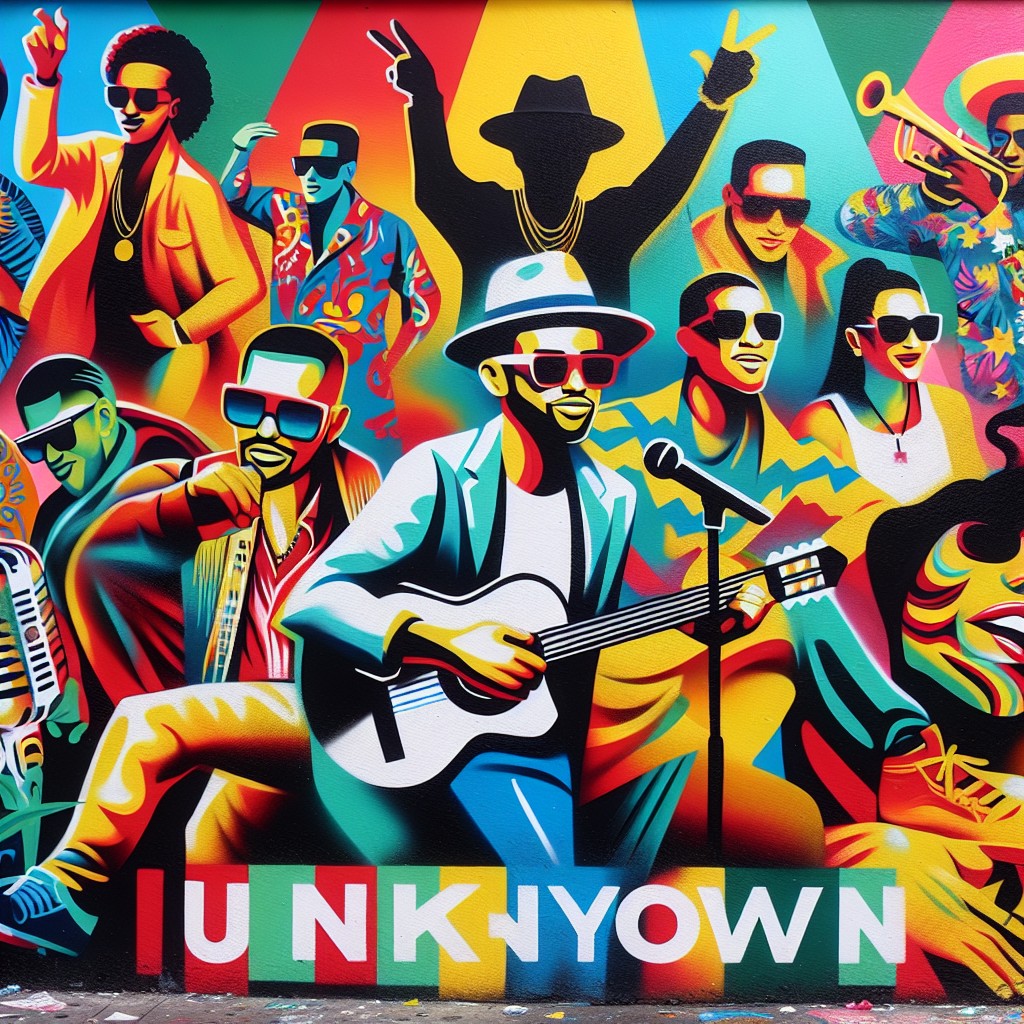

As I sit in my makeshift studio, surrounded by an array of synthesizers and a collection of vinyl records that could rival a small library, I often find myself pondering the roots of the music I love. Reggaeton, that infectious genre that has taken the world by storm, has a fascinating origin story that traces back to the vibrant streets of Jamaica. It all began with reggae and dancehall, where artists like Bob Marley and Shabba Ranks laid the groundwork for a sound that would eventually evolve into something uniquely Puerto Rican.
In the late 1980s, Jamaican sounds began to infiltrate the Puerto Rican music scene, thanks to the influx of Caribbean immigrants.
I can almost picture the scene: young producers in San Juan, huddled around their cassette players, experimenting with beats and rhythms, trying to capture that elusive magic.
It’s like watching a group of mad scientists in a lab, mixing potions and hoping for an explosion of creativity. And boy, did they succeed! Learn the essentials of music production with our online course.
Key Takeaways
- Reggaeton originated from the fusion of Jamaican dancehall and Panamanian reggae en español in the streets of Puerto Rico.
- The genre evolved by incorporating elements of Caribbean and Latin American music, such as salsa, merengue, and bachata, creating a unique sound that resonated with a global audience.
- Pioneers like Daddy Yankee, Tego Calderón, and Ivy Queen played a crucial role in popularizing reggaeton and paving the way for its commercial success.
- Reggaeton’s globalization was fueled by the internet and social media, allowing artists to connect with fans worldwide and collaborate with international musicians.
- The genre’s influence on mainstream pop music is evident through successful collaborations and crossover hits with artists from different genres, breaking down cultural barriers.
The Evolution of Reggaeton: Fusing Caribbean and Latin American Influences
As I delve deeper into the evolution of reggaeton, I can’t help but marvel at how it became a melting pot of Caribbean and Latin American influences. The genre didn’t just stop at reggae; it embraced elements from hip-hop, merengue, and even rock. It’s as if reggaeton decided to throw a party and invited every genre under the sun.
The result? A sound that is irresistibly catchy and undeniably danceable. I remember chatting with a fellow music enthusiast at a local café, where we debated the merits of various reggaeton tracks.
“It’s like a musical buffet,” he said, gesturing animatedly with his coffee cup. “You’ve got the spicy beats of dembow, the sweet melodies of salsa, and the tangy flavor of hip-hop all on one plate!” I couldn’t help but laugh at his analogy, but he had a point. Reggaeton’s ability to blend different musical styles is what makes it so appealing to a diverse audience.
It’s a genre that invites everyone to the dance floor, regardless of their musical preferences.
The Pioneers of Reggaeton: Artists Who Paved the Way for the Genre’s Success
No discussion about reggaeton would be complete without acknowledging the pioneers who paved the way for its success. Artists like Daddy Yankee, Don Omar, and Tego Calderón were instrumental in shaping the sound and bringing it to mainstream audiences. I often find myself daydreaming about what it must have been like for these artists in their early days—performing in small clubs, hustling to get their music heard, and dreaming of making it big.
One evening, while attending a local reggaeton concert, I struck up a conversation with an aspiring artist who idolized Daddy Yankee. “He’s like the Michael Jordan of reggaeton,” he said with wide eyes. “He took the game to another level!” I couldn’t help but agree; Daddy Yankee’s hit “Gasolina” was a game-changer that introduced reggaeton to a global audience.
It’s inspiring to see how these pioneers not only created music but also built a community around it, encouraging new artists to follow in their footsteps.
The Globalization of Reggaeton: How the Genre Spread Beyond Latin America
As I scroll through my social media feed, I’m constantly amazed by how reggaeton has transcended borders and become a global phenomenon. What started as a local genre in Puerto Rico has now infiltrated charts in countries as far away as South Korea and Sweden. It’s like watching your favorite indie band go from playing in your garage to headlining Coachella—except this time, it’s happening on a global scale.
I remember attending a music festival where I overheard two fans discussing their favorite reggaeton tracks in English, French, and even Mandarin! “I don’t even speak Spanish,” one of them admitted sheepishly, “but I can’t help but dance when I hear ‘Despacito.’” It’s a testament to the universal appeal of reggaeton; its infectious rhythms and catchy hooks have a way of breaking down language barriers. The genre has become a cultural bridge, connecting people from different backgrounds through the power of music.
Reggaeton’s Influence on Mainstream Pop Music: Collaborations and Crossover Hits
Reggaeton’s influence on mainstream pop music is undeniable. Collaborations between reggaeton artists and pop icons have become increasingly common, resulting in crossover hits that dominate radio waves worldwide. I often find myself chuckling at how quickly these collaborations can turn into viral sensations—one moment you’re jamming to a Justin Bieber track, and the next you’re dancing to J Balvin’s infectious beats.
During a recent studio session with some fellow producers, we discussed the impact of these collaborations on the music industry. “It’s like a musical game of chess,” one producer quipped. “You’ve got to strategize your moves carefully to create that perfect blend.” And he was right; these collaborations often lead to chart-topping success and introduce reggaeton to new audiences who may not have otherwise explored the genre.
It’s exciting to witness how reggaeton continues to shape pop music while maintaining its unique identity.
The Role of Social Media in Reggaeton’s Global Success
The Rise of Reggaeton on TikTok
I often find myself scrolling through TikTok, where users create dance challenges set to reggaeton tracks—each video more creative than the last. It’s like watching an endless loop of choreography that makes me want to jump up and join in (though my dance moves might resemble those of an awkward giraffe).
Democratizing the Music Industry
I once had a conversation with an up-and-coming reggaeton artist who credited social media for his rapid rise to fame. “I posted one video of me dancing to my own song,” he said with a grin, “and it went viral overnight! Suddenly, everyone wanted to collaborate.” It’s incredible how social media has democratized the music industry, allowing aspiring artists to gain recognition without relying solely on traditional channels.
Reggaeton’s Digital Success
Reggaeton has thrived in this environment, leveraging social media to connect with fans and share their stories.
Reggaeton’s Impact on Fashion and Culture: From Dance Moves to Style Trends
Reggaeton isn’t just about the music; it has also made significant waves in fashion and culture. The genre has influenced everything from streetwear trends to dance styles that have become synonymous with its sound. I often find myself chuckling at how quickly certain fashion trends emerge from reggaeton culture—one moment it’s oversized hoodies and gold chains, and the next it’s all about fitted caps and colorful sneakers.
At a recent fashion event, I overheard two designers discussing how reggaeton has inspired their latest collections. “It’s all about capturing that urban vibe,” one designer said passionately. “We want our clothes to reflect the energy of reggaeton!
Reggaeton has not only influenced what we wear but also how we express ourselves through dance—each move telling a story that resonates with audiences worldwide.
The Rise of Female Reggaeton Artists: Breaking Barriers in a Male-Dominated Genre
As I reflect on the landscape of reggaeton today, I can’t help but celebrate the rise of female artists who are breaking barriers in this male-dominated genre. Artists like Karol G, Natti Natasha, and Rosalía have emerged as powerful voices, challenging stereotypes and redefining what it means to be a woman in reggaeton. Their success is not just about their talent; it’s about their ability to inspire others and pave the way for future generations.
During a recent panel discussion on women in music, one speaker passionately declared, “We’re not just here to support our male counterparts; we’re here to take our place at the table!” The room erupted in applause—a powerful reminder that female artists are making their mark in an industry that has historically sidelined them. It’s inspiring to see how these women are using their platforms to advocate for equality while creating music that resonates with fans around the world.
Reggaeton’s Political and Social Commentary: Addressing Issues of Identity and Inequality
Reggaeton is more than just catchy beats; it often serves as a platform for political and social commentary. Many artists use their music to address issues such as identity, inequality, and social justice—topics that resonate deeply within their communities. As I listen to tracks that tackle these themes, I’m reminded of how powerful music can be as a tool for change.
I once attended a concert where an artist spoke passionately about his experiences growing up in Puerto Rico amidst economic struggles. “Music is my way of speaking out,” he said earnestly. “I want my songs to reflect our reality.” It was a poignant moment that highlighted how reggaeton can be both entertaining and thought-provoking—a genre that encourages listeners to engage with important social issues while still having fun on the dance floor.
The Future of Reggaeton: Innovations and New Directions in the Genre
As I look ahead to the future of reggaeton, I can’t help but feel excited about the innovations and new directions the genre may take. With technology advancing at lightning speed, producers are experimenting with sounds that push boundaries and challenge conventions. I often find myself daydreaming about what reggaeton will sound like in five or ten years—will we see more fusion with electronic music?
Perhaps collaborations with artists from entirely different genres? During a recent brainstorming session with fellow producers, one colleague suggested incorporating elements from traditional folk music into reggaeton tracks. “Imagine blending those rich melodies with modern beats!” he exclaimed enthusiastically.
It’s this kind of creative thinking that keeps reggaeton fresh and relevant—a genre that continues to evolve while staying true to its roots.
Reggaeton’s Enduring Legacy: How the Genre Continues to Shape the Music Industry
As I reflect on my journey as an amateur music producer immersed in the world of reggaeton, I realize that its enduring legacy is undeniable. The genre has not only transformed the Latin music landscape but has also left an indelible mark on the global music industry as a whole. From its humble beginnings in Puerto Rico to its current status as a cultural phenomenon, reggaeton has proven that it is here to stay.
I often find myself sharing stories with fellow producers about how reggaeton has influenced our own creative processes. “It’s like having an endless source of inspiration,” one friend remarked during our last jam session. “Every beat tells a story; every lyric captures an emotion.” And he was right—reggaeton continues to inspire countless artists across genres while shaping trends that resonate with audiences worldwide.
In conclusion, as I sit here surrounded by my gear and dreams of producing my own hit track someday, I am grateful for the journey that reggaeton has taken me on—a journey filled with rhythm, creativity, and endless possibilities. Whether through its infectious beats or powerful messages, reggaeton remains a testament to the power of music as a unifying force that transcends borders and brings people together in celebration of life itself.
Check Out Our Music Producer Class!
FAQs
What is reggaeton?
Reggaeton is a music genre that originated in Puerto Rico in the late 1990s. It is a blend of reggae, dancehall, and hip hop, with Spanish-language lyrics.
How did reggaeton become popular?
Reggaeton gained popularity through its infectious beats and catchy melodies, as well as the rise of Latin pop stars like Daddy Yankee, Don Omar, and Wisin & Yandel who helped bring the genre to the mainstream.
What is the global impact of reggaeton?
Reggaeton has had a significant global impact, with artists like J Balvin, Bad Bunny, and Ozuna achieving international success and collaborating with mainstream artists from around the world.
How has reggaeton influenced other music genres?
Reggaeton has influenced other music genres, such as pop and hip hop, leading to a fusion of styles and the creation of new sub-genres like “Latin trap.”
What are some of the biggest reggaeton hits?
Some of the biggest reggaeton hits include “Gasolina” by Daddy Yankee, “Danza Kuduro” by Don Omar, and “Despacito” by Luis Fonsi and Daddy Yankee, which became a global phenomenon.
