
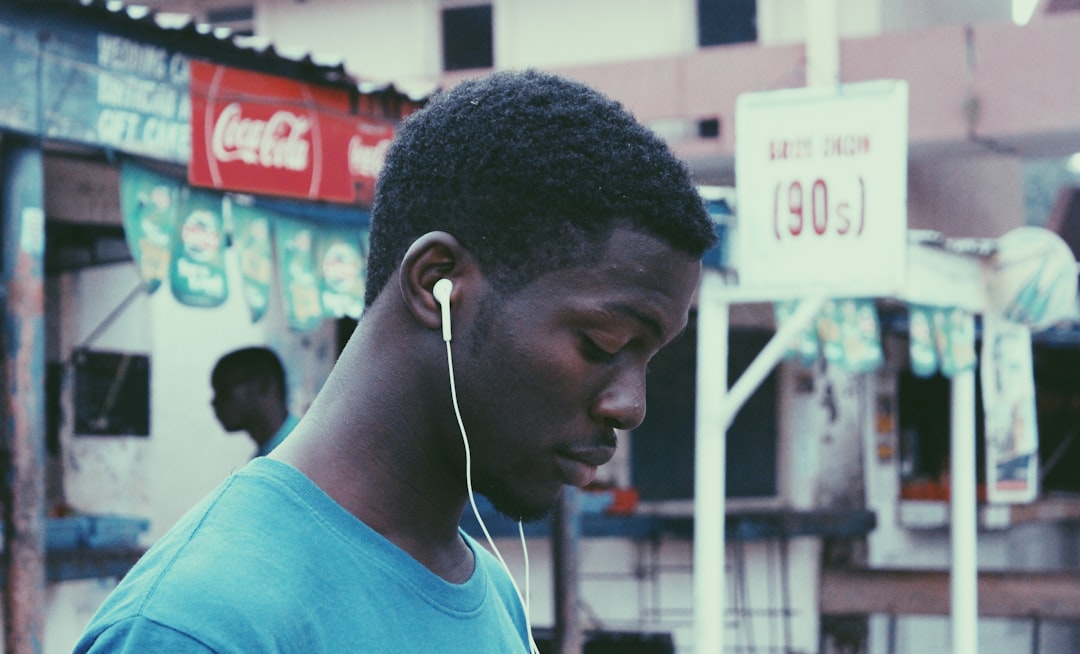

I remember the first time I truly “got” Afrobeats. It wasn’t a club banger, not some viral TikTok soundbite. It was a late-night deep dive, head-nodding to Burna Boy’s “Ye” with a good pair of headphones that made the bass hum in my bones. I’d been dabbling in music production for years, a self-proclaimed bedroom genius armed with a suspiciously large collection of VSTs and dreams bigger than my bank account. My sound had always hovered somewhere between indie electro-pop and slightly-too-earnest singer-songwriter fare. But that night, as Fela Kuti samples mingled with contemporary beats, something clicked. It wasn’t just music; it was a conversation, a narrative, a whole damn vibe. And that’s when I started to understand the true emotional economy of Afro-Pop.
I’d always considered music as a form of communication, but Afrobeats, and African music more broadly, showed me it was also a form of intense, almost spiritual, connection. It’s a sonic language that transcends geographical borders and linguistic barriers. I recall a conversation I had with my friend, Sarah, a professional DJ who’s forgotten more about music than I’ll ever learn. We were at a bustling downtown coffee shop, the kind where the aroma of burnt sugar and artisanal coffee battles with the cacophony of human chatter.
“You know, Mark,” she’d said, stirring her cappuccino with a flourish, “what makes Afrobeats so potent isn’t just the catchy melodies or the danceability. It’s the story. Every track, even the most seemingly frivolous, carries a weight, a cultural resonance that people feel.”
I nodded, pretending to be profound while secretly scrambling to absorb her wisdom. “So, it’s not just about the technicalities of the production then?” I ventured, ever the amateur.
She chuckled, a rich, throaty sound. “Oh, the technicalities are there, trust me. But they serve a greater purpose. Imagine trying to explain the emotional pull of a mother’s lullaby to someone who’s never experienced that kind of love. It’s like that. The music speaks to something primal.”
The Universal Language of the Groove
This primal connection, I realized, is what makes Afrobeats so universally appealing. My own producing journey had been a series of intellectual exercises: how can I make this synth sound wider? What compression settings will give this kick more punch? But the emotional economy of Afrobeats operates on a different plane. It’s not about intellectual dissection; it’s about feeling. The moment a beat drops, your body responds. It’s an involuntary, almost instinctive reaction. It’s a testament to the power of rhythm to bypass the brain and go straight for the soul.
I once tried to explain this to my very earnest, slightly-too-serious classical pianist cousin, David. He was politely dissecting a Beyoncé track, pointing out the harmonic complexities. I played him a Wizkid song. He listened, his brow furrowed in concentration. Then, slowly, almost imperceptibly, his foot started tapping. I grinned. “See?” I said. He just grunted, but I knew I’d made a convert.
In exploring the intricate connections between music and emotional well-being, a related article titled “The Healing Power of Music: Exploring Music Therapy and Sound Healing” delves into the therapeutic aspects of sound, which can be particularly relevant when considering the emotional economy of Afro-Pop music. This article discusses how various musical genres, including Afro-Pop, can influence mood and promote healing through rhythm and melody. For more insights on this topic, you can read the article here: The Healing Power of Music: Exploring Music Therapy and Sound Healing.
Crafting Narratives: The Art of Lyrical Storytelling
Beyond the infectious rhythms, what consistently amazes me about Afro-Pop is the lyrical depth. I’ve always admired songwriters who can weave a compelling story, but in Afrobeats, these stories often carry a profound cultural and social significance. They’re not just tales of love and loss; they’re often reflections of a society, its struggles, its joys, its aspirations.
From Personal Experience to Collective Consciousness
I’ve spent countless hours dissecting the lyrics of artists like Davido, Tiwa Savage, and Mr Eazi. Their songs are often deeply personal, yet resonate with a collective consciousness. They speak of hustle, of overcoming adversity, of celebrating success, and of navigating the complexities of modern life in Africa and beyond. It’s this unfiltered honesty that I find so refreshing. There’s a rawness, an authenticity that I often struggle to capture in my own meticulously crafted electronic soundscapes.
My mentor, an older, seasoned studio engineer named James, who’d seen every trend come and go, once told me over a greasy plate of jollof rice at a West African joint, “Mark, you Western producers, you’re always trying to invent a new sound. These guys? They’re just telling their truth. And that, my friend, is eternal.” His words, delivered with a mouthful of plantain, stuck with me.
The Power of Vernacular and Code-Switching
Another fascinating aspect is the ingenious use of vernacular and code-switching. Artists seamlessly blend English with various African languages, creating a linguistic tapestry that is both inclusive and exclusive. It’s a nod to their roots, a celebration of identity, and at the same time, a clever way to draw in a wider global audience. I often find myself looking up translations, not just for the meaning, but to understand the nuances, the clever wordplay, the cultural references that make the lyrics come alive. It’s like a secret handshake with millions of people.
I remember chatting with a Nigerian friend of mine, Chika, about this very phenomenon. She explained, “When a song switches to Yoruba or Igbo, it’s like a little wink to the listeners who understand. It’s a moment of shared understanding, a deeper connection that non-speakers might miss, but they still feel the energy, the emotion.”
The Emotional Arc of the Grooves: Energy and Release
One of the most compelling features of Afrobeats, from a production standpoint, is its masterful manipulation of emotional energy. The songs often build, layer by layer, creating a palpable sense of anticipation and eventual release. It’s a carefully orchestrated dance between tension and catharsis that keeps listeners engaged and moving.
Building Anticipation: The Art of the Intro
I’ve spent countless hours trying to perfect intros in my own tracks – that crucial first few seconds that either grab a listener or lose them forever. Afrobeats artists are masters of this. They don’t just drop a beat; they slowly introduce elements, building a sonic landscape that draws you in. A subtle synth pad, a percussive flourish, a vocal ad-lib – each element acting as a breadcrumb, enticing you further into the track. It’s a slow seduction, not a bang.
My fellow producer acquaintance, Lena, a stern but brilliant sound designer, once remarked to me, “Mark, you’re always rushing to the chorus. Listen to how Wizkid lets the atmosphere build. It’s like a good story – you don’t just jump to the climax.” I took her advice to heart, albeit with a slight cringe at being called out.
The Euphoria of the Drop and Sustained Energy
And then there’s the ‘drop.’ But it’s not always the heavy, slamming drop of EDM. In Afrobeats, it’s often a more organic, fluid release of energy. The beat kicks in fully, the vocals soar, and the instruments coalesce into a joyous, irresistible groove. And this energy isn’t fleeting; it’s sustained, carrying you through the entire track, often building to even higher peaks before a satisfying resolution. It’s a journey, not just a destination.
Sure, here is the sentence with the clickable link:
I am interested in learning more about music production and its essentials.
Beyond the Airwaves: Cultural Impact and Soft Power
The emotional economy of Afro-Pop extends far beyond catchy tunes and danceable rhythms. It’s a powerful force of cultural exchange, a vibrant expression of identity, and an undeniable form of soft power that has captivated the global imagination. It’s a testament to the resilience and creativity of African artists.
Redefining African Identity on a Global Stage
For so long, Western media often portrayed Africa through a lens of struggle and hardship. While these realities exist, Afro-Pop offers a counter-narrative – one of joy, vibrancy, ambition, and innovation. It’s a celebration of African culture, presented on its own terms, and consumed by millions worldwide. This shift in narrative is profound. It’s showing the world a multifaceted, dynamic Africa, brimming with creative energy.
I recall a lively debate I had with my old university professor, a stern ethnomusicologist who initially viewed contemporary African music with a slightly disapproving academic eye. I argued that Afrobeats was doing more for cultural understanding than decades of UN resolutions. He raised an eyebrow, but a faint smile played at his lips. “You might have a point, Mark,” he conceded, the closest thing to an endorsement I’d ever gotten from him.
Fostering a Global Community Through Music
I’ve seen firsthand how Afrobeats brings people together. At dance classes, at parties, even just impromptu gatherings in parks – the music creates a common ground. It fosters a sense of community, irrespective of background. It’s an invitation to celebrate, to connect, to belong. This universal appeal, this ability to unite through rhythm and melody, is perhaps the most valuable aspect of its emotional economy. It’s not just about selling records; it’s about building bridges.
I was at a summer festival last year, standing in a crowd that was a beautiful mosaic of cultures and ethnicities, all swaying and singing along to a Burna Boy track. I looked around, and in that moment, I felt a deep sense of optimism. This wasn’t just entertainment; it was a movement.
The Emotional Economy of Afro-Pop Music explores the intricate relationship between cultural expression and emotional resonance in the genre, highlighting how artists connect with their audiences on a deeper level. This theme of emotional engagement is also evident in the production of electronic music, as discussed in a related article that provides insights into the nuances of creating impactful sounds. For those interested in understanding the technical aspects of music production, you can read more about it in this comprehensive guide on how to produce EDM.
My Journey as a Producer: Embracing the Afro-Pop Philosophy
| Emotional Economy of Afro-Pop Music |
|---|
| 1. Emotional Connection with Audience |
| 2. Influence on Mood and Feelings |
| 3. Use of Rhythmic Beats and Melodies |
| 4. Lyrics and Storytelling |
| 5. Impact on Cultural Identity |
As an amateur producer, my evolution has been inextricably linked to my evolving understanding of Afro-Pop. It’s taught me to listen differently, to feel more, and to approach music not just as a technical exercise, but as a holistic emotional experience. I’m now trying to infuse my own productions with that same sense of narrative, that same emphasis on emotional arc, that same respect for connection.
Beyond the Technicalities: The Soul of the Sound
I used to be so hung up on the perfect mix, the cleanest master. Now, I understand that sometimes, a little grit, a little imperfection, can add soul. The raw energy of a live recording, the subtle nuances of a vocal performance – these are the things that resonate emotionally, irrespective of whether they conform to Western audiophile standards. It’s less about the pristine sound and more about the authentic feeling.
My studio isn’t just a laboratory for sound experiments anymore; it’s a space where I try to capture moments, emotions, and stories. I’m no longer just making beats; I’m trying to create experiences. And while I’m still years away from achieving any notable success, the journey itself has been incredibly enriching.
The Future of My Sound: A Fusion of Worlds
My ambition now is to blend my electronic sensibilities with the inherent emotionality and rhythmic complexity of Afro-Pop. I’m learning more about indigenous African instruments, experimenting with polyrhythms, and actively seeking out collaborations with vocalists who can bring that authentic storytelling power. It’s an exciting, challenging path, but one that feels incredibly fulfilling. The emotional economy of Afro-Pop isn’t just a fascinating topic for an article; it’s a guiding philosophy for my own creative endeavors. It’s taught me that the most powerful music isn’t just heard; it’s felt, it’s shared, and it truly connects. And that, to me, is the real prize.
Check Out Our Music Producer Class!
FAQs
What is Afro-Pop music?
Afro-Pop music is a genre that combines elements of traditional African music with pop and contemporary styles. It often features a fusion of African rhythms, melodies, and instruments with modern production techniques.
How does Afro-Pop music impact the emotional economy?
Afro-Pop music has a significant impact on the emotional economy by providing a platform for expressing and processing emotions. It often addresses themes of love, joy, struggle, and resilience, resonating with listeners on an emotional level and contributing to their overall well-being.
What are some common emotional themes in Afro-Pop music?
Common emotional themes in Afro-Pop music include love, heartbreak, empowerment, celebration, and social commentary. These themes reflect the diverse experiences and emotions of the artists and their audiences, creating a deep emotional connection through the music.
How does Afro-Pop music contribute to cultural identity and representation?
Afro-Pop music plays a crucial role in representing and celebrating African cultural identity. It showcases the diversity of African musical traditions and serves as a powerful tool for promoting cultural pride, unity, and representation on a global scale.
What is the global impact of Afro-Pop music on the music industry?
Afro-Pop music has had a significant global impact on the music industry, influencing and inspiring artists and audiences worldwide. Its infectious rhythms and uplifting melodies have contributed to the popularity of African music on the international stage, leading to collaborations, cross-cultural exchanges, and a growing appreciation for Afro-Pop music.
