
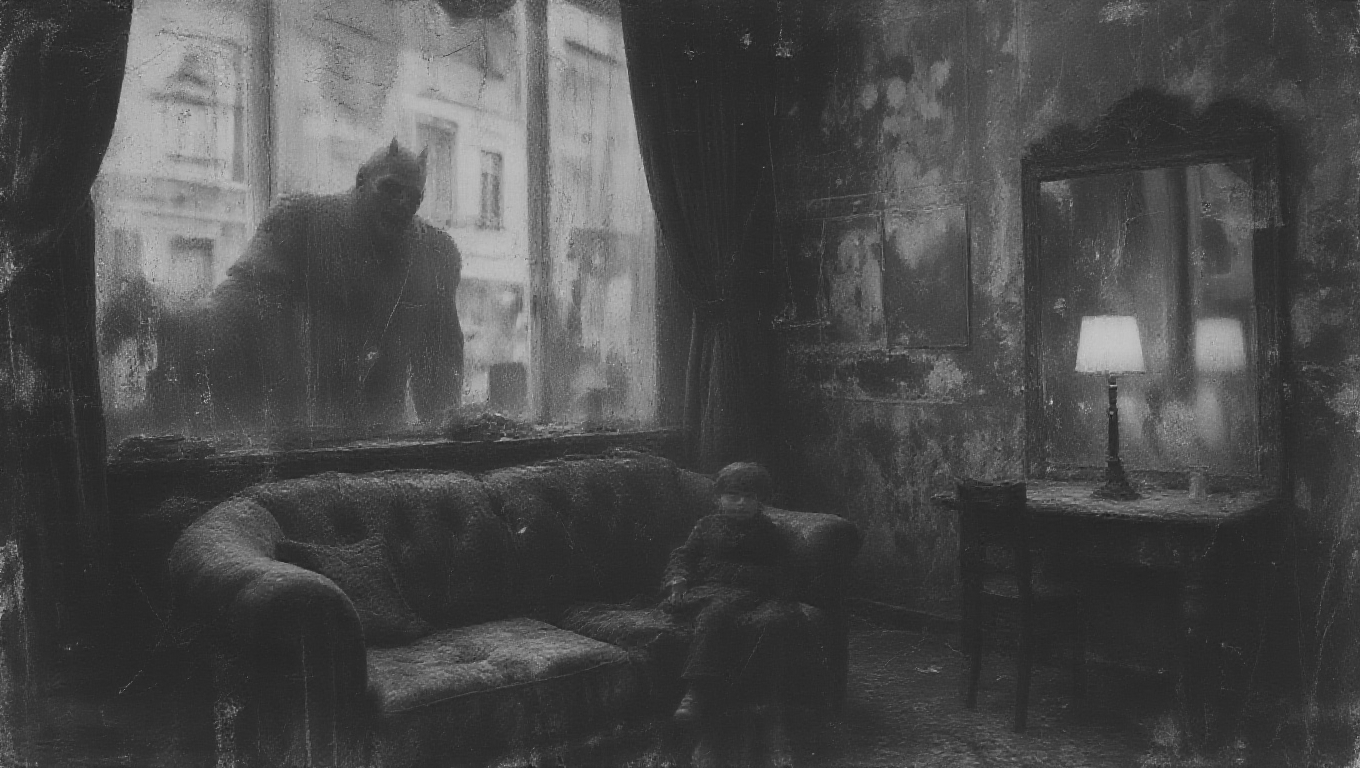

Some tracks move a crowd; SORÉNYA Krampus Krampus (Club Mix) moves the unconscious. From the first thud, it feels like you’ve stepped into a threshold where the dance floor blurs into dream logic — where sweat, shadow, and memory braid into one pulse. It’s a liminal space built with surgical kicks and spectral overtones, a corridor between strobe and psyche that makes you sway first and question later. This is SORÉNYA at their most magnetic: a producer engineering a doorway, then inviting you to cross it.
What pulls you through is the track’s alloy of dark folklore and precision production — Krampus lore wired into the circuitry of modern club science. Krampus Krampus doesn’t lean on gimmick; it weaponizes myth, sculpting bells, chain-tinged textures, and breathlike whispers into a ritual you can feel in your ribs. The payoff is ecstatic release without losing the chill of the unknown: techno’s disciplined machinery fused with darkwave’s shadowed romance, tuned for peak-time impact and after-hours introspection. Keep listening, and you’ll hear why it doesn’t just play — it possesses, one engineered heartbeat at a time.
1. The Ritualistic Rhythm: When 4/4 Feels Like a Summoning
From the first thud, SORÉNYA Krampus Krampus (Club Mix) plants a flag in the sternum. The kick isn’t merely loud; it’s sculpted — dry on the attack, plush in the 45–60 Hz belly — locking with a sine-glossed sub that slides like a shadow under a door. This is not a groove you step into so much as a trance you’re drafted into, a dark techno cadence that narrows your focus until breath and downbeat are indistinguishable. In club mix analysis terms, the phase coherence between kick and sub forms a singular pulse, the kind that makes the room feel like one animal heart.
Then the hands start moving before you notice why. Ghosted claps flicker in the margin — barely-there transients riding the off-beat, then answering themselves a sixteenth late, like a chorus behind the veil. Syncopated percussion grids up a call-and-response: a brushed rim here, a dusty tamb accent there, a clap that’s more vapor than clap, all “pulling” the body forward with a priest’s certainty. You don’t hear a cue; you obey it. The result is a kinetic consent, the dance-floor equivalent of eyes adjusting to candlelight.
What makes the pull feel inexorable is the lattice of subtle polyrhythms braided over the 4/4 spine. A shaker whispers three-over-four in triplet delay, while a muted metallic tick paints a five-step cycle that never lands where your brain expects. These cross-currents don’t destabilize the beat; they oxygenate it, layering urgency until each bar feels like a corridor you were sure you’d already walked. With every pass, SORÉNYA threads you deeper into the track’s underworld, turning repetition into revelation.
And when the arrangement strips back — kick, sub, the tiniest smear of room tone — you notice the ritual has already happened. Your stride is longer, shoulders looser, instincts sharpened to micro-changes in swing and decay. That’s the sleight of hand at the core of SORÉNYA Krampus Krampus (Club Mix): it summons without spectacle, engineering compulsion through precision. The body translates the code first, the mind catches up after, and both agree — this isn’t just rhythm; it’s rite.
2. Darkwave Melodics with Euphoric Uplift
The track’s melodic engine lives in the minor, but it refuses to sulk. Lead lines flirt with Phrygian inflections before pivoting into a Dorian lift, so the ear hears shadow and then a sliver of sky. That modal swerve turns a brooding palette into propulsion, threading sorrow through a needle of optimism. Saturated, slightly detuned synths smear at the edges — like candle smoke in a warehouse — while an industrial bass undercurrent grinds upward in semitone rungs, daring the melody to answer.
Breakdowns arrive like held breath. Pads bloom in slow motion, their attack feathered by long pre-delays that push the room back and invite your pulse forward. Evolving arpeggios sketch runes in the stereo field — left to right, low to high — so when the kick vanishes you don’t feel absence, you feel invocation. Tiny harmonic overtones glint off the top, a granular shimmer that suggests frost forming on steel, and just beneath, ethereal vocals whisper vowel shapes more than words, a human ghost inside the machine.
When the drop returns, it doesn’t chase dopamine with gimmicks; it earns it. Filtered tension unwinds, the modal lift resurfaces, and the harmony steps from minor rue to radiant resolve without abandoning its nocturne core. The pads narrow, the arps snap into tighter subdivisions, and the melody’s contour straightens as if standing to meet the strobe. That blend — melancholy as color, euphoria as motion — feels less like contrast than transfiguration.
Producers will hear the architecture in the release: harmonics tucked into the midrange so the hook can glow without crowding the kick; a carefully automated chorus that widens on off-beats to tease open the chest; reverb tails gated just enough to keep the groove bone-dry when it must, cavernous when it can. For dancers and DJs alike, this is darkwave taught to soar — proof that catharsis isn’t the negation of gloom, but its alchemy.
4. SORÉNYA’s Sound Design Alchemy
If the lore gave the track its fangs, SORÉNYA’s sound design sharpens them to a gleam. You can hear analog grit meeting digital precision in the very first lead: a saturated, slightly detuned mono line that smears at the edges while an FM-bright counterline nips with glassy harmonics. Granular sprinkles cascade like frost across the stereo field — tiny shards that catch light without crowding the core frequencies — so each pass reveals a fresh glint. It’s the alchemy of a club-ready banger engineered to feel handcrafted rather than factory-stamped.
On repeat listens, the ear-candy turns confessional. Time-stretched artifacts bloom at the tail of phrases, like breath caught on cold air; reverse snares inhale before they strike, creating a percussive premonition that tightens the chest by a millisecond. Spectral swells ghost up from below the floorboards, harmonics rising just out of reach, then folding back into the mix as if nothing happened. These micro-events function like cinematic edits — blink and you miss them, but your nervous system doesn’t.
That finesse extends to the way elements occupy space. The reverb architecture is cavernous yet obedient, a catacomb mapped with laser precision: early reflections kiss the mids for presence, while long tails are bandwidth-sculpted to dodge the kick and sub. You feel height and depth without the smear — front-of-mix transients stay knife-clean, anchored to the groove so dancers perceive weight, not wash. It’s the rare reverb that expands emotion while respecting utility.
Even the transitions feel spellbound by physics. A filtered noise bed is phase-aligned to the kick so tension rises without sacrificing punch; a mid-bass growl is sidechained with a soft-knee curve that breathes instead of pumps. Macro-movements glide on automation arcs, while micro-variations — velocity nudges, envelope mischief, LFO drift — lend human unpredictability to machine rigor. The result is a track that courts the mythic with modern tools, turning folk terror into tactile electricity you can mix, master, and most importantly, feel.
Built for Clubs, Tuned for Headphones
SORÉNYA Krampus Krampus (Club Mix) wears its floor instincts openly: a clean 16–32 bar intro and outro that DJs can ghost in over a kick-only bed, then energy ramps that arrive like precise pressure waves rather than blunt drops. In a quick track breakdown, you can mark obvious cue points — the first hat lift, the secondary percussion bloom, the vocal wisp before the break — each crafted to make back-to-backs feel telepathic. It’s the rare cut that lets a selector tease tension at -6 dB for two minutes, then snap it into focus without scrambling the room’s phase center or smearing the groove.
Under the hood, the sub energy is a lesson in restraint and authority. The low end sits tight and mono-centered, punching through on an Alpha Theta in a 500-cap basement as confidently as it does on a Funktion-One stack at sunrise. There’s no wool or wobble — just a disciplined kick-to-sub handshake that preserves headroom and keeps sidechain breathing musical, not gasping. This is where the mixing and mastering flex: the shelf is stable, harmonics are curated, and even on modest setups the bass reads as a single, confident body rather than a blur of sympathy resonances.
Headphones reveal a different beast: micro-detail in the mids and highs that turns late-night listens into private archaeology. Glassy granular motes flicker above the hats, a filament-thin noise layer traces the snare’s ghost, and those chain-like textures tuck into the stereo field with surgical width that never compromises mono sum. Pan automation moves like a stage whisper, and the reverb tails bloom then tuck, letting you follow motion in three dimensions without losing the spine. It’s club steel cloaked in velvet — durable, yet decadent to the ear.
For DJs and producers alike, this duality expands utility. In the booth, it locks, blends, and lifts. In the studio, it invites forensic replay: why does that riser feel taller than it measures, and how does the mid-bass growl stay wide yet anchor center? The answers live in choices you can hear but barely see — phase-aligned layers, transient discipline, and a top-end polish that stays silky at volume. SORÉNYA Krampus Krampus (Club Mix) doesn’t just translate; it transcends, proving that architecture and aura can coexist when design serves the body and the mind in equal measure.
6. Mixdown and Mastering that Breathe
You feel the first kick like a clean strike of flint: a transient that snaps, then yields to a low-end shelf so steady it feels architectural. The result is impact without smear — no muddy bloom, no flabby overlap — just a firm foundation that lets the groove articulate with dancer’s precision. Even as the system heats up and the subs flex, the punch holds shape, allowing hi-hats to shimmer in the negative space and claps to punctuate without fighting for room. It’s the kind of engineering that turns a kick into a compass, orienting the body in the dark.
Loudness is competitive, but never suffocating. Instead of brickwalled fatigue, the track breathes — micro-dynamics preserved so the breakdowns fall away like oxygen withdrawal and the drops return like a fresh lungful of air. Those tiny level swells in the midrange, the careful attack on the bass transient, the restraint on the limiter — together they unlock long-form stamina. In a marathon DJ setlist, that difference matters: dancers don’t glaze over; they sharpen, ride the contours, and stay present to each crest of dancefloor energy.
Crucially, the low end is mono-compatible and disciplined, a single spine rather than a double exposure. That means no phasey wobble when a club folds to mono, no vanishing sub when you step off-axis. Above that spine, width is curated — stereo excitement in the upper mids and highs, where it counts, but pulled back just enough to keep the center punch intact. On big rigs, the room blooms; on home cans, the soundstage opens; in a livestream fold-down, nothing collapses.
Listen closely and you’ll catch the subtle decisions that separate volume from violence: a clipper that kisses the peaks, a multi-band that glues without smearing transients, a tiny tilt in the high shelf to keep air moving at peak volume. It’s floor science masquerading as sorcery — mastering that respects the song’s breath while arming it for any system, any crowd, any hour. The possession feels earned because the mix doesn’t shout; it speaks with a calm authority that your body trusts.
7. A Three-Act Journey You Can Feel
From the first tolling bells to the first breath of sub, SORÉNYA Krampus Krampus (Club Mix) announces an initiation: motifs surface like sigils in fog, simple at first — a two-note minor fragment, a faint chain rattle tucked behind the hi-hats, a distant chant that may be reverb or memory. As the groove tightens, those elements recur and evolve, invited back under new lighting. What began as texture becomes language; the bassline learns to speak, the pads learn to ache, and the percussion learns to beckon. You’re not just entering a track — you’re being ushered into its rites.
The confrontation arrives not as shock, but as recognition sharpened. When the first of the euphoric drops hits, familiar phrases are recontextualized: the bell you heard in the intro becomes a shimmering arp that snakes through the midrange, the mid-bass growl suddenly leads instead of follows, and a ghosted clap pattern flips into a call-and-response that feels both inevitable and uncanny. It’s the same ink on a new page. DJs feel it on the floor; headphone listening reveals it in high relief — the granular dust on a reversed tail, the way a filtered whisper blooms into a chorus of harmonics right before the kick slams back in.
Act two keeps testing your footing, cycling motifs at tighter intervals, until the second drop lands with learned courage rather than brute force. Themes don’t just return; they confess more. A modal swerve that felt ominous earlier now reads as permission to let go, and the synth lead, once a warning, arcs into an answer. The track teaches you how to hear it, then rewards you for passing the initiation with a release that feels earned — ecstasy braided with dread, the exact alloy that makes bodies surge forward in unison.
And then, the parting: elements peel away with intent, but the air never clears completely. A melody strand lingers one note shy of resolution; a low metallic overtone paces the exit like a shadow that hasn’t chosen you yet — or has, and is patient. It’s a closing argument that withholds the final sentence, the kind of unresolved cadence that sends your hand back to the cue point. In SORÉNYA Krampus Krampus (Club Mix), the journey doesn’t end at silence; it loops in your chest, insisting on immediate replay, as if the only way out is once more, deeper.
8. The Emotional Palette: Fear, Thrill, and Surrender
The track’s emotional voltage lives in the crossfade between menace and euphoria, where shadow and light trade places every eight bars. In the dim glow of strobes, that first swell of mid-bass growl feels like a hand on the shoulder — unseen, undeniable — while the synths bloom with a cinematic atmosphere that reframes dread as anticipation. You sense the folklore in your bones before you clock it in your ears, a primal recognition that danger and delight can share the same heartbeat. It’s not just tension; it’s a ritualized dare, inviting you to lean into what’s lurking.
As the groove tightens, the kick’s steady insistence turns the body into a metronome, trimming away hesitation until only movement remains. This is where surrender begins: in the refusal of the rhythm to let you hang back on the margins. Then the melody turns — a single interval pivot, a modal swerve — and suddenly the room lifts. That shift is surgical but soulful, the signature of mystical electronic music at its most transportive, where a minor-key phrase tilts toward radiance and rewrites your internal weather in a single measure.
Listeners talk about “possession” because the narrative arc syncs with physical response: snare ghosts tug the sternum forward; a whispery riser locks breath in the throat; the drop exhales for you. In a warehouse at 2 a.m., you watch a circle of dancers move from guarded nods to full-bodied abandon, like a tide claim-staking the shore. The track doesn’t demand devotion so much as demonstrate it, mapping fear onto anticipation and thrill onto release until you can’t tell which came first.
Crucially, the afterimage lingers. When the final tails dissolve, the nervous system still hums, as if some part of the mix remains threaded through your posture and pulse. That residue — half shadow, half spark — is the calling card of a song built for both the floor and the subconscious. It’s why, even in silence, you feel the echo of the ritual and reach instinctively for replay: to meet the beast again, and to greet the light it brings.
9. Scene Synergy: Why It Resonates Now
In a moment when hybrid dance floors crave heft and haze in equal measure, SORÉNYA Krampus Krampus (Club Mix) feels purpose-built. It cross-pollinates techno weight — ironclad kicks, monolithic low end — with the chiaroscuro of darkwave: minor-key motifs, frostbitten textures, and those atmospheric builds that bloom like cold breath in a strobe-lit room. That synthesis speaks the lingua franca of underground club culture right now, where a warehouse lineup might swing from EBM body music to shadowed synth-pop without losing thread. The track thrives in that liminal seam, offering DJs a backbone for momentum and a palette for mood.
Its programming also makes it a playlist shapeshifter. On goth-tinged lists, the song’s dusky leads and spectral overtones nestle beside post-punk downtempo without dimming; in peak-time techno sets, the same cues read as jet fuel — an escalation tool that sets up or detonates a main-floor moment. You can hear it open a corridor between textures: a DJ can emerge from industrial stompers, ride SORÉNYA’s incantatory mid-bass, then pivot into brighter, trance-curled harmonics without jolting the crowd. That elasticity keeps curators happy too, letting them thread a narrative from gloom to glow in a single sequence.
Producers hear a different invitation. The sound design is modular by intent: chain-like foley slices cleanly over driving percussion loops; the mid-bass growl tucks under FM leads without masking; and the reverb architecture leaves space for edits and re-rubs. In practice, that means it plays nice in back-to-backs and radio blends, but it also sparks derivative creativity — bootleg intros, extended atmospheric builds for sunrise sets, and dub versions that strip to bone and sinew for after-hours sanctuaries. It’s the rare cut that flatters both the technician and the dramatist behind the decks.
And that’s the bridge: underground credibility with broad emotional impact. SORÉNYA Krampus Krampus (Club Mix) honors scene codes — tension, restraint, textural rigor — while delivering a catharsis anyone on a crowded floor can feel. It resonates now because it decodes the current dialect: heavy yet human, haunted yet generous, engineered for seamless utility but brimming with story. Whether you’re logging a late-night headphone session or threading a festival peak, it doesn’t just fit the moment; it defines the contour of it.
Conclusion: Where Folklore Meets the Floor
SORÉNYA Krampus Krampus (Club Mix) fuses folklore, futurism, and floor science into a singular experience — one that slips between myth and machinery, shadow and strobe. It’s the rare cut that feels engineered for the present tense of the club while haunted by something older, deeper, and beautifully unruly. Every element locks with purpose: the weight of the kick, the cavern of the reverb, the shiver of metallic overtones — each a vector pulling you further into its orbit.
Its ritual rhythm, evocative sound design, and dynamic journey explain why it doesn’t just play — it possesses. From initiation to release, the track makes surrender feel like agency, threading Krampus lore through precision production until the body understands what the mind can only name after the lights come up. This is floor alchemy with teeth: a club weapon, a midnight confession, and a replay that keeps summoning you back.
