
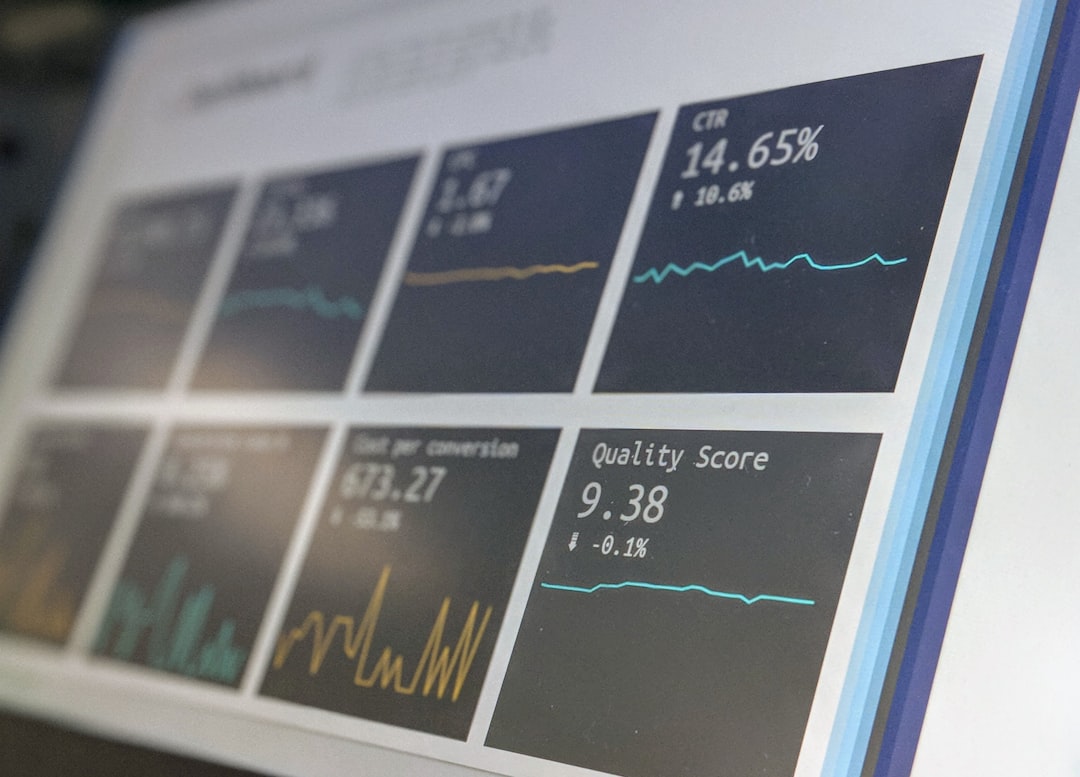

I remember the day I first encountered the article title “Why Data Alone Can’t Predict Hits – But Patterns Can.” I was staring at a blank DAW screen, a half-finished beat staring just as blankly back at me. My Spotify Wrapped had just dropped, and while I’d had a decent run with some indie electronic playlists, the elusive “breakthrough” still felt a million miles away, a star I was orbiting but never quite reaching. The algorithm, that omnipotent, often bewildering deity of the digital age, was both my compass and my tormentor. I’d spent countless hours dissecting Spotify data, analyzing genre trends, even delving into the murky depths of TikTok virality predictions. And yet, here I was, still an amateur, still pouring my heart into tracks that, more often than not, ended up as digital dust. This article, though, felt different. It wasn’t another clickbait “how to go viral” listicle. It was a promise of nuance, a whisper of understanding beyond the cold, hard numbers.
I once had this brilliant idea – or so I thought. I’d spent a sleepless night, fueled by lukewarm coffee and even warmer ambition, crafting a track that was, by all accounts, a statistical marvel. I’d analyzed the BPM of the top 20 pop songs, incorporated a vocal melodic range similar to a recent chart-topper, and even used a specific reverb decay time prevalent in viral TikTok sounds. My friend, Sarah, a cynic masquerading as a music enthusiast, had listened to it.
“It’s… interesting, Mark,” she’d said, a slight tremor in her voice that I later recognized as suppressed laughter. “It sounds like a computer program trying to write a song.”
“That’s the point!” I’d exclaimed, brimming with naive pride. “It’s statistically perfect!”
She’d just raised an eyebrow. “Perfect, perhaps, if your goal is to make a spreadsheet sing. But where’s the oomph? Where’s the soul?”
That stung, not because it was untrue, but because I hadn’t even considered it. I was so engrossed in the data, in the quantifiable elements, that I’d forgotten the intangible. This was the first time I truly understood the article’s premise. Data can tell you what happened, but rarely why it resonated. It’s like trying to understand the magic of a sunset by measuring the wavelengths of light. You get the science, but you miss the awe.
When Data Leads Us Astray
I’ve seen countless aspiring artists fall into this trap. They meticulously track streaming numbers, beat out trendy genres, and mimic popular artists, only to find their music drowning in the digital ocean. The problem isn’t with the data itself; it’s with our interpretation and over-reliance on it. Data, in its raw form, is a rearview mirror. It shows us where we’ve been, not where we’re going. It’s a reflection, not a prophecy.
The Problem with “Good” Metrics
For a while, my definition of a “good” metric was anything that indicated high engagement – high stream counts, long listening durations, lots of shares. But then I started noticing anomalies. Some artists with modest numbers had fiercely loyal fanbases, their music forming deep, resonant connections. Others, with higher initial spikes, quickly faded into obscurity. It wasn’t just about the quantity of engagement, but the quality. A thousand passionate fans are infinitely more valuable than a hundred thousand fleeting clicks.
In exploring the complexities of predicting musical hits, the article “The Anatomy of a Chart-Topping Summer Hit: Elements of Success” provides valuable insights that complement the discussion in “Why Data Alone Can’t Predict Hits — But Patterns Can.” While the former delves into the specific elements that contribute to a summer hit, such as catchy melodies and relatable lyrics, it underscores the importance of understanding broader patterns in music trends rather than relying solely on data analytics. For a deeper understanding of what makes a song resonate with audiences, you can read the article here: The Anatomy of a Chart-Topping Summer Hit: Elements of Success.
The Human Element: The Unquantifiable Resonance of Sound
One evening, I was at an open mic night, a rare venture outside my bedroom studio. A singer-songwriter, a young woman named Chloe, stood on stage with just her acoustic guitar. Her voice wasn’t technically perfect; there were moments where it cracked, where a note was slightly off-key. But the raw emotion, the vulnerability, it was palpable. The whole room was silent, captivated. When she finished, there was a collective sigh, then a roar of applause.
Later, I ran into her at the bar. “That was incredible,” I told her, genuinely moved. “Your song… it just got me.”
She smiled, a little shyly. “Thanks. It’s about a messy breakup I had last year. I just… wrote what I felt.”
“But how did you know it would connect like that?” I asked, still thinking in terms of “predicting hits.”
She chuckled. “I didn’t! I just wrote it for me. If someone else feels it too, that’s a bonus.”
That conversation was a revelation. It highlighted the fundamental truth: music, at its core, is a deeply human experience. We connect with authenticity, with vulnerability, with stories that mirror our own. These are not things that can be easily quantified by an algorithm.
The Power of Authenticity and Vulnerability
Chloe’s performance hammered home the point that the most powerful music often comes from a place of raw, unadulterated honesty. It’s not about ticking boxes or adhering to trends; it’s about expressing something deeply personal. This authenticity creates a resonance that transcends genre or production value.
Storytelling Beyond Lyrics
Even instrumental music tells a story. A melancholic piano phrase can evoke a feeling of loss, a driving synth line can ignite a thirst for adventure. As producers, we often get caught up in the technicalities, but the greatest tracks are those that transport the listener, that paint a vivid picture in their mind. This narrative element, often subtle and subconscious, is a crucial pattern in music that connects.
Shifting from Prediction to Pattern Recognition: Finding the Underlying Blueprint
This is where the article really started to make sense to me. It wasn’t about casting aside data entirely, but about using it as a tool to identify patterns, not to make definitive predictions. It’s about understanding the language of hit songs, rather than trying to reverse-engineer them.
I remember discussing this with my mentor, David, a seasoned producer who’d seen the music industry ebb and flow for decades. “Mark,” he’d said, puffing on his pipe, “think of it like this: a scientist studying bird migration doesn’t predict which specific bird will fly to Africa. They observe patterns – seasonal changes, common flight paths, food availability. Those patterns allow them to understand the why and how of migration, not the individual destiny of each avian traveler.”
He’d gestured at my DAW. “The data tells you a certain chord progression is common in pop. The pattern recognition tells you why – perhaps it evokes a sense of uplift, or tension and release, that human beings universally respond to. It’s about understanding human psychology through the lens of music.”
Beyond Superficial Similarities
It’s easy to spot superficial similarities in hit songs: a catchy chorus, a repeating drum beat. But true pattern recognition goes deeper. It’s about understanding the underlying emotional architecture, the psychological triggers, and the cultural contexts that make a song resonate.
Deconstructing the “Feel”
How do you quantify the “feel” of a song? You can’t, not directly. But you can identify patterns in tempo, rhythm, harmonic progression, and melodic contour that consistently evoke specific emotional responses. A certain syncopated rhythm might create a sense of urgency, while a sustained chord in a major key might induce joy. These are the patterns that truly matter.
Sure, here is the sentence with the clickable link:
I am interested in learning more about music production techniques.
The Art of Subtlety: Decoding the Unspoken Language of Hits
One of my biggest takeaways has been the importance of subtlety. Sometimes, the most powerful elements in a song are not the loudest or most obvious. They are the intricate textures, the nuanced arrangement, the barely perceptible shifts in dynamics that create tension and release.
I was once showing David a track I’d poured weeks into. It had a huge, bombastic chorus, intending to be a guaranteed earworm. He listened intently, then offered his feedback.
“It’s… loud, Mark,” he said, a twinkle in his eye. “But where’s the conversation? It’s like you’re shouting at the listener instead of whispering to them.”
He then showed me a classic track, “Billie Jean” by Michael Jackson. “Listen to the bassline,” he instructed. “It’s iconic, yes, but it’s not overpowering. It’s a subtle groove, a foundational pulse that invites, rather than demands, your attention. The sparse percussion, the way the vocals sit just so in the mix – it’s all incredibly deliberate, incredibly subtle. It creates anticipation, a sense of mystery.”
It was a masterclass in less-is-more. My “statistically perfect” bombast now sounded crude and unrefined in comparison. The patterns in “Billie Jean” weren’t about raw decibels; they were about expertly crafted negative space, about allowing each element to breathe and contribute to the overall storytelling.
The Power of Arrangement and Dynamics
The arrangement of instruments, the dynamic shifts, the subtle layering of sounds – these are often the unsung heroes of hit songs. They create depth, intrigue, and emotional movement that raw data can easily overlook.
Leveraging Silence and Space
Just as important as the notes played is the silence between them. Strategic pauses, moments of sparseness, can build tension, create impact, and allow the listener to absorb and reflect. These are patterns of rhythmic and melodic phrasing that profoundly influence a song’s emotional arc.
In exploring the complexities of predicting musical hits, it is essential to consider how patterns in listener behavior can provide deeper insights than data alone. A related article discusses the impact of music on sports culture, highlighting how certain songs become anthems that resonate with fans during pivotal moments. This connection between music and emotion can be seen in the sensational playlist that captures the essence of football chants and songs, illustrating how collective experiences shape musical preferences and trends.
The Symbiotic Relationship: Data as a Compass, Patterns as the Map
| Metrics | Data Alone | Patterns |
|---|---|---|
| Accuracy | May be limited by the quality and quantity of data | Can identify trends and recurring patterns for more accurate predictions |
| Insight | Provides raw information without context | Offers deeper understanding of underlying relationships and behaviors |
| Adaptability | May struggle to adapt to changing circumstances | Can recognize evolving patterns and adjust predictions accordingly |
| Complexity | May struggle with complex and interconnected data | Can uncover complex relationships and dependencies within the data |
So, where does that leave my grand ambition to produce a hit song? Not with a rejection of data, but with a refined understanding of its role. Data is a powerful tool, an indispensable compass in the vast wilderness of the modern music industry. It can point me in the right direction, highlighting general trends, audience demographics, and even potential gaps in the market. But it’s the patterns – the underlying blueprints of human emotion and musical connection – that form the actual map.
I’ve learned to use data not to dictate my creative choices, but to inform them. If data shows a certain tempo range performing well in a particular genre, I consider it, but I don’t blindly adhere to it. Instead, I ask myself why that tempo might resonate. What emotional state does it evoke? What cultural context does it fit into?
My conversations with Sarah, Chloe, and David have been instrumental in this shift. They’ve taught me that music is a conversation, a shared experience, not a mathematical equation. The algorithms are catching up, slowly but surely, learning to identify more complex patterns beyond simple metrics. But they still lack the human intuition, the gut feeling, the inexplicable spark that truly makes a song a hit.
Ultimately, predicting a hit isn’t about finding a magic formula in a spreadsheet. It’s about combining the analytical power of data with the intuitive understanding of human psychology and musical artistry. It’s about knowing where to look in the data to uncover the patterns that speak to the soul. And that, I believe, is the true secret behind making music that actually resonates. And maybe, just maybe, with enough dedication and a little bit of that human magic, my own tracks will one day join the ranks of those that manage to whisper to the world, rather than shout.
Check Out Our Music Producer Class!
FAQs
What is the difference between data and patterns in predicting hits?
Data refers to raw information or facts, while patterns are the meaningful connections or trends found within the data. While data provides the foundation for analysis, patterns allow for more accurate predictions and insights.
Why is data alone insufficient for predicting hits?
Data alone is insufficient for predicting hits because it only provides information without context or meaning. Without identifying patterns within the data, it is difficult to make accurate predictions about future hits or trends.
How do patterns contribute to predicting hits?
Patterns contribute to predicting hits by revealing meaningful connections and trends within the data. By identifying patterns, analysts can make more accurate predictions about future hits based on historical data and trends.
What are some examples of patterns that can help predict hits?
Examples of patterns that can help predict hits include seasonal trends, consumer behavior patterns, and historical performance data. By analyzing these patterns, analysts can make more informed predictions about potential hits.
How can businesses use patterns to improve hit predictions?
Businesses can use patterns to improve hit predictions by investing in data analysis tools and hiring skilled analysts to identify and interpret meaningful patterns within their data. By leveraging patterns, businesses can make more accurate predictions and strategic decisions.
