
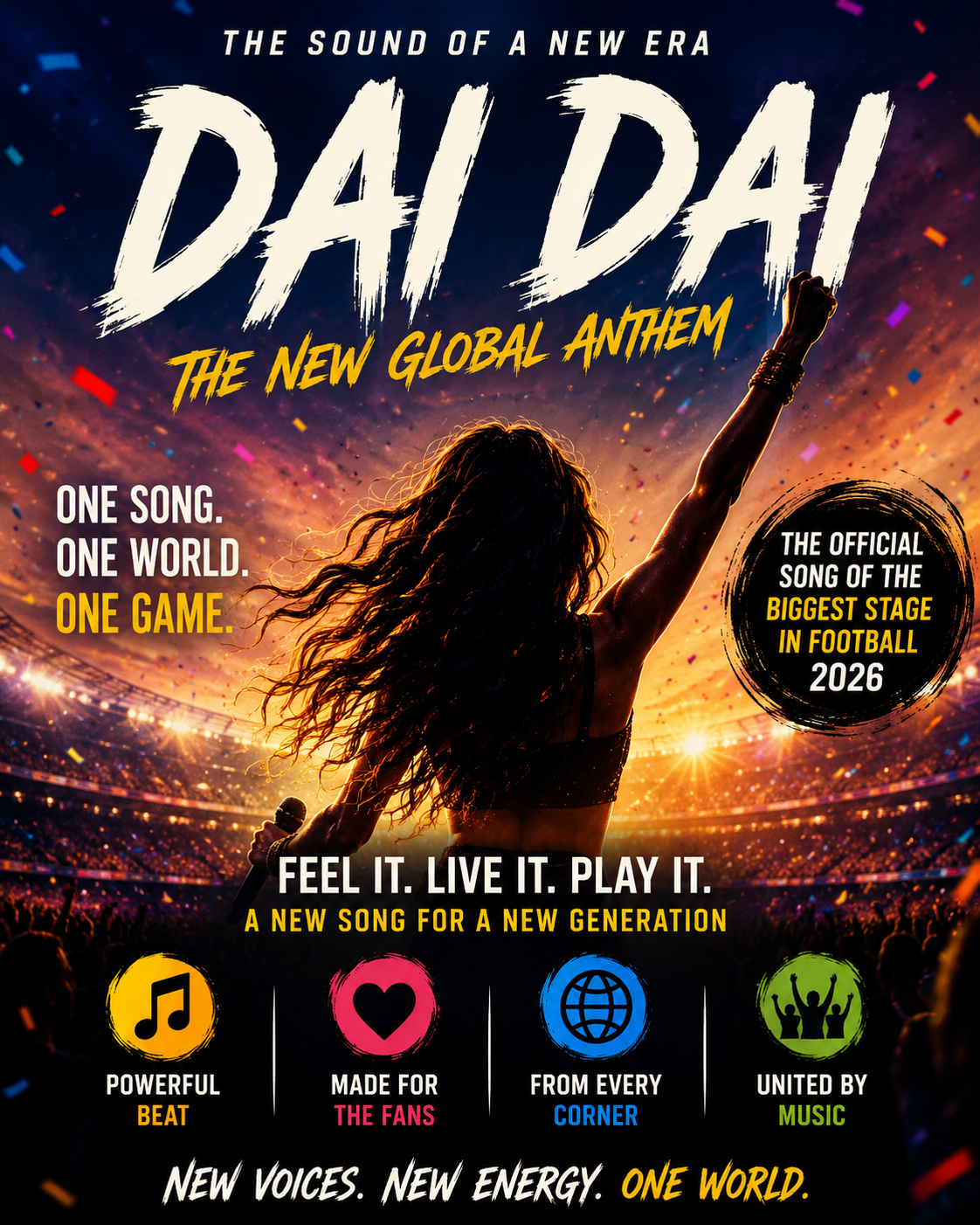

There are football songs. And then there are football moments that become part of global culture.
When Shakira released “Waka Waka” during the 2010 World Cup, few expected it to become one of the biggest football anthems ever created. More than a decade later, millions of fans still associate the song with emotion, unity, and unforgettable tournament memories.
Now Shakira is returning to football’s biggest stage again — this time with “Dai Dai,” a new World Cup anthem featuring Burna Boy. The song was officially teased from Rio de Janeiro’s legendary Maracanã Stadium and will be released globally on May 14.
The teaser already feels designed for modern football culture:
short emotional hooks, global visuals, stadium energy, and an uplifting chorus aimed directly at social media virality.
But this is not just another tournament song.
The timing is important.
Football fans today are overwhelmed with corporate content, polished marketing campaigns, and forgettable “official” music. That is exactly why emotional football songs still matter. Fans do not remember statistics forever — they remember feelings.
That may explain why Shakira remains so strongly connected to World Cup culture. From “Hips Don’t Lie” in 2006 to “Waka Waka” in 2010 and “La La La” in 2014, she has repeatedly become part of football’s emotional soundtrack.
The addition of Burna Boy also feels strategic.
Afrobeats has become one of the most globally influential music genres of the last years, especially among younger audiences on TikTok and YouTube. Combining Shakira’s worldwide recognition with Burna Boy’s modern global appeal could give “Dai Dai” something many recent football songs lacked: real cross-generational energy.
And that may be the biggest reason why people are suddenly paying attention.
Because football fans are not only searching for goals anymore. They are searching for atmosphere, identity, emotion, and moments that feel bigger than the game itself.
Whether “Dai Dai” reaches the legendary status of “Waka Waka” remains uncertain.
But one thing is already clear:
The World Cup 2026 has officially found its soundtrack.
