
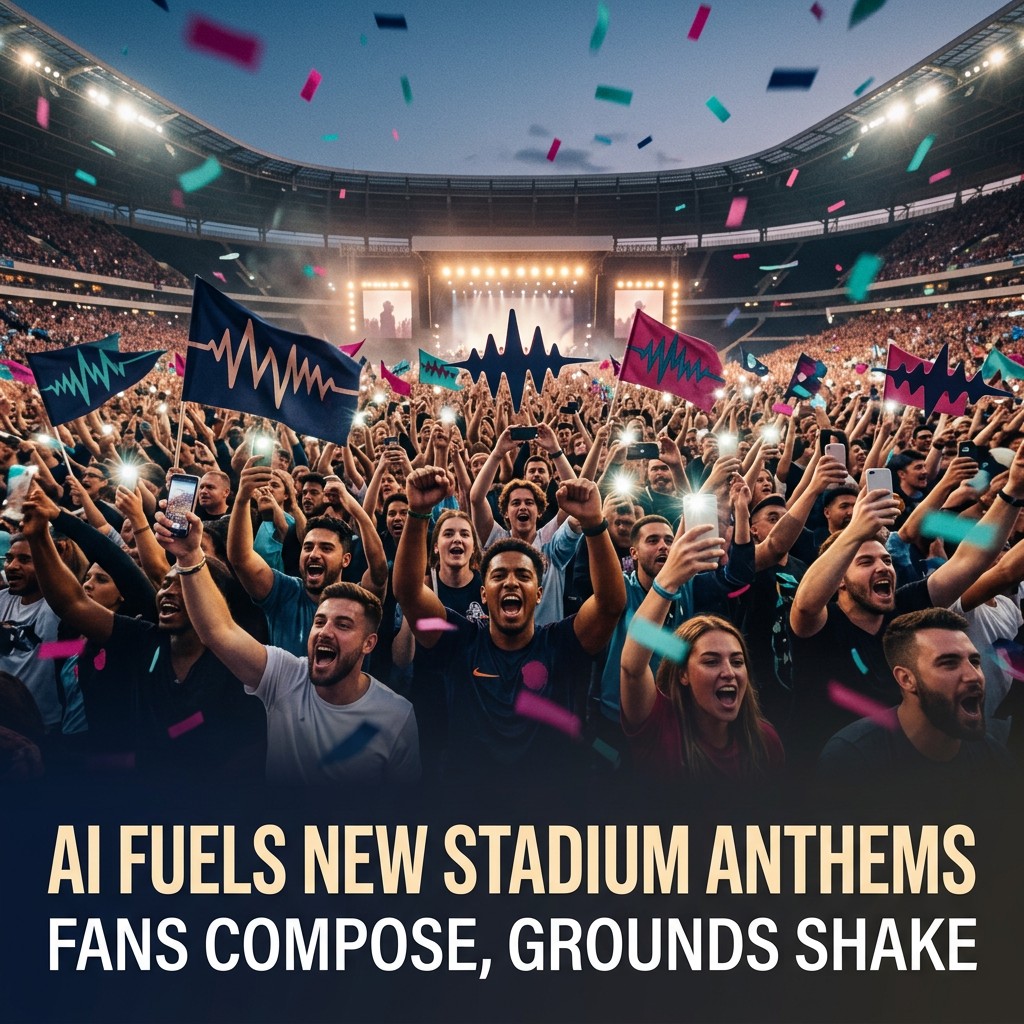

The roar of the crowd, the crunch of the tackle, the sheer, unadulterated joy of a last-minute winner – football is a symphony of raw emotion. But what if that symphony could be amplified, transformed, and even born anew? We’re not just talking about louder drums in the stands; we’re talking about a seismic shift in the very soundscape of the beautiful game. The age of AI and football music has dawned, and it’s already setting the internet ablaze, proving that artificial intelligence isn’t just about algorithms and data; it’s about passion, identity, and the primal urge to sing your heart out.
This isn’t science fiction; it’s happening now. As we hurtle towards the 2026 World Cup, a new generation of fan-made anthems, powered by AI, are exploding across platforms like TikTok, YouTube, and Instagram. These aren’t polished, studio-produced tracks; they’re raw, electrifying bursts of collective fervor, capturing the very essence of what it means to be a supporter. We’re seeing millions of views pour in for songs that didn’t exist a few weeks ago, generated by fans with a vision and the help of smart technology. It’s a revolution in miniature, a testament to the democratizing power of innovation and the enduring spirit of football fandom.
The Spark of Creation: From TikTok Trends to Global Anthems
It’s easy to dismiss AI-generated music as soulless or robotic, but the reality on the ground is far more nuanced. The recent surge in AI football anthems demonstrates a powerful synergy between human intention and technological capability. The trend appears to have been ignited by evocative tribute songs for the French national team, tracks that captured a sense of national pride and unwavering belief. Think “Imbattables” or “light up the world” – anthems designed to be shouted from the terraces, to galvanize players and supporters alike. From this potent starting point, the momentum has been unstoppable, spreading like wildfire to the passionate footballing nations of Brazil, Portugal, Argentina, and Germany. Each iteration builds on the last, adopting a similar chant-style format, infused with potent, stadium-ready beats that seem to echo the collective heartbeat of a nation united by sport.
From Niche to Viral: The AI Anthem Phenomenon
What’s truly remarkable is the speed at which these AI-powered anthems are achieving viral status. A quick scroll through social media reveals a constant stream of new tracks, each vying for attention with infectious energy and relatable themes. These aren’t just being created by musicians; they’re being crafted by everyday fans, fueled by a desire to express their support in a new and innovative way. The accessibility of AI tools has lowered the barrier to entry, transforming a passion for football into a tangible musical output.
Case Studies: The Global Reach of AI Football Music
The origins of this trend, while difficult to pinpoint with absolute certainty to a single moment, often trace back to independent creators experimenting with the latest AI music generation tools. Early examples, particularly those celebrating the French team’s journey, served as a blueprint. These tracks, characterized by their simplicity, rhythmic focus, and crowd-pleasing refrains, struck a chord. This template was then readily adopted by fans in other football-mad countries. Videos showcasing Brazilian fans singing an AI-generated chant to pump up their team, or Argentinian supporters blasting an anthem with a distinctly Latin beat, highlight the diverse cultural adaptations of this new wave of fan-made music. The shared elements—the driving rhythm, the singalong choruses, the sense of defiant optimism—create an immediate connection, transcending language barriers and uniting fans under the banner of their shared love for the beautiful game.
In exploring the innovative intersection of technology and sports, “The Rise of AI Football Music” highlights how artificial intelligence is transforming the way we experience football through music. For those interested in further enhancing their celebrations, a related article titled “The Ultimate Birthday Playlist: Songs to Celebrate Your Loved Ones in Style” provides a curated selection of tracks perfect for any festive occasion. You can check it out here: The Ultimate Birthday Playlist.
The AI Toolkit: Democratizing Music Production
One of the most compelling aspects of this AI-driven football music revolution is how creators are leveraging these tools as powerful production assistants. AI is not replacing the creative spark; it’s acting as a sophisticated amplifier, helping fans translate their sonic visions into reality with unprecedented speed and ease. Imagine wanting to capture that feeling of a stadium erupting after a goal. Now, with AI, you can generate a chorus of enthusiastic crowd vocals that sound remarkably authentic, or produce a driving, percussive beat that perfectly complements a triumphant melody. Tutorials circulating online showcase the astonishing efficiency of these platforms, with some creators demonstrating how to build an entire anthem, complete with catchy hooks and even matching visual elements, in under an hour. This accessibility democratizes music production, allowing individuals without formal musical training to participate in the creation process.
Building Blocks of Sound: Catchy Hooks and Crowd Vocals
The success of these AI anthems often hinges on their ability to be instantly memorable and easily replicated. AI excels at generating short, rhythmic phrases and repetitive, chant-like melodies that are tailor-made for stadium singalongs. Beyond the core melody, AI tools can also generate convincing renditions of crowd vocals, adding an essential layer of authenticity and energy. This ability to synthesize what sounds like thousands of voices cheering creates an immediate sense of scale and communal spirit, even for a track produced by a single individual in their bedroom.
Visual Harmony: Matching AI Music with Compelling Imagery
The viral nature of these anthems is further amplified by their often accompanying visuals. AI isn’t just used for the audio; it’s being employed to generate simple, yet effective, video content that complements the music. This can range from dynamic graphics and team emblems to compilations of iconic football moments. The seamless integration of AI-generated audio and visuals creates a complete package, optimized for quick consumption and sharing on social media platforms. The ability to produce both elements rapidly means that fans can react to match outcomes or player performances in near real-time, further fueling the cycle of viral engagement.
The Underdog Effect: AI Music as the Voice of the Fan
Perhaps the most emotionally resonant aspect of this AI revolution is its inherent underdog narrative. While FIFA commissions official anthems by renowned artists, these AI-generated tracks often emerge from the grassroots, from the very heart of the fanbase. They are the unsolicited outbursts of passion, the raw, unpolished cries of supporters who feel a deep, personal connection to their team. This authenticity resonates. In a world saturated with manufactured content, the genuine, unadulterated passion poured into these AI anthems cuts through the noise. It’s the sound of fans taking ownership, of bypassing traditional gatekeepers and speaking directly to their collective emotions.
From Silence to Symphony: Empowering the Everyday Fan
For years, the creation of official football songs was the domain of professional musicians and record labels. Fans could sing along, they could create amateur recordings, but they were largely spectators in the musical output associated with their beloved clubs and national teams. AI has shattered this paradigm. Now, a fan with a burning desire to create a tribute can, with the aid of intelligent software, craft a track that captures the intensity of a derby match or the hope of a tournament run. This empowerment, this ability to translate fervent support into a shareable musical artifact, is profoundly significant for fan identity.
The Unfiltered Emotion: Why AI Anthems Connect
These AI anthems often possess a raw, unscripted quality that professional productions can sometimes lack. They capture the immediate euphoria of a win, the gut-wrenching agony of a loss, or the unwavering belief in the face of adversity. This unvarnished emotional authenticity is what draws millions to these tracks. They feel real. They are the sonic embodiment of the collective spirit, a testament to the fact that the most powerful music often comes from the heart, unburdened by commercial considerations – even if the creator used an algorithm to get there.
Sure, here is the sentence with the clickable link:
I am interested in learning more about music production techniques.
The Controversial Tune: Copyright, Ownership, and the Soul of Art
However, as with any disruptive technology, this AI music boom is not without its complexities and challenges. The very accessibility that makes it so appealing also raises significant questions about copyright, ownership, and the fundamental nature of artistic creation. When an AI generates a track based on existing musical styles and patterns, who truly owns it? Does the user who prompts the AI hold the copyright, or does the AI developer? These are uncharted territories, and the legal and ethical implications are still being vigorously debated.
The Unsettling Questions: Who Owns the Anthem?
The commercial side of football music is a lucrative industry. Official FIFA World Cup songs, for instance, are major releases with significant financial stakes. When AI-generated anthems, created by individuals with minimal resources, gain massive traction and potentially rival the popularity of these official releases, it naturally sparks concerns about artist remuneration and the protection of intellectual property. The blurred lines of authorship in AI-generated content are a ticking time bomb, and the football music scene is an early battleground.
The Artist’s Dilemma: Competing with the Machine
For established musicians and producers, the rise of AI music presents a new set of challenges. As fans increasingly turn to AI for their anthems, will this impact the demand for professionally produced music? Some fans, captivated by the raw energy and relatable nature of AI tracks, have even expressed a preference for them over official releases, a sentiment that is undoubtedly unsettling for many in the music industry. This raises a fundamental question: where does human artistry end and technological assistance begin, and how do we ensure fairness and compensation in this evolving landscape?
In exploring the innovative intersections of technology and music, an intriguing article discusses the evolution of reggaeton and its impact on contemporary soundscapes. This piece highlights how genres like reggaeton are adapting to new influences, much like the way AI is transforming the world of football music. For a deeper understanding of these musical shifts, you can read more about it in this insightful article on the sound of reggaeton.
The Glitches in the System: Quality and the Future of AI Music
While the emotional impact and viral spread of these AI anthems are undeniable, it’s also important to acknowledge the inherent limitations. Experts and music producers who have delved into this space consistently point out that the strongest current use case for AI in football music lies in creating short, chantable songs that are ideal for fan engagement and advertising. These are the genres where AI’s ability to generate catchy hooks and repetitive rhythms truly shines. However, when venturing into more complex musical arrangements or seeking nuanced emotional depth, AI can still falter.
The Imperfect Melody: Quality Issues and Odd Glitches
Even the most sophisticated AI music generators can produce tracks with audible artifacts, strange sonic anomalies, or an overall lack of polish. These “glitches” can range from subtle imperfections in vocal synthesis to jarring shifts in tempo or melody. While some might argue that these imperfections add to the “raw” character of fan-made music, they can also detract from the overall listening experience for a broader audience. The technology is evolving at a breakneck pace, but it’s not yet capable of consistently replicating the artistry and sonic fidelity of human composers and producers.
The Human Touch: Nuance, Emotion, and the Future
Ultimately, the future of AI in football music likely lies in collaboration rather than outright replacement. AI can be an incredibly powerful tool for inspiration, for generating initial ideas, for handling repetitive tasks, and for creating accessible production environments. However, the subtleties of human emotion, the deep understanding of cultural context, and the intricate artistry that defines truly memorable music will likely remain the domain of human creators for the foreseeable future. The most exciting prospect is a future where AI empowers more fans to express their passion musically, while seasoned artists harness AI as a new instrument in their creative arsenal, pushing the boundaries of what’s possible and enriching the sonic tapestry of the beautiful game for everyone. Are we witnessing the dawn of a new era for football anthems, or just a fleeting digital fad? The next few years, and the stadiums filling up for tournaments to come, will tell a compelling story.
Listen To The Top African Music Playlist On Spotify
FAQs
What is AI football music?
AI football music refers to the use of artificial intelligence technology to create music specifically designed for football events, such as matches, tournaments, or promotional content related to the sport.
How does AI football music work?
AI football music works by using algorithms and machine learning to analyze and understand the characteristics of football-related content, such as the energy, tempo, and emotions associated with the sport. This data is then used to compose and produce music that complements and enhances the overall football experience.
What are the benefits of using AI football music?
The use of AI football music allows for the creation of customized and dynamic soundtracks that can evoke the excitement, passion, and energy of football. It can enhance the atmosphere of football events, engage fans, and create a unique and memorable experience for both players and spectators.
Who is using AI football music?
AI football music is being used by various football organizations, teams, and brands to enhance their content and events. It is also being utilized by broadcasters, advertisers, and media companies to create impactful and engaging football-related music and audiovisual content.
What is the future of AI football music?
The future of AI football music is likely to see further advancements in technology, leading to even more sophisticated and personalized soundtracks for football events. As AI continues to evolve, it is expected to play an increasingly significant role in shaping the audiovisual landscape of football.
