
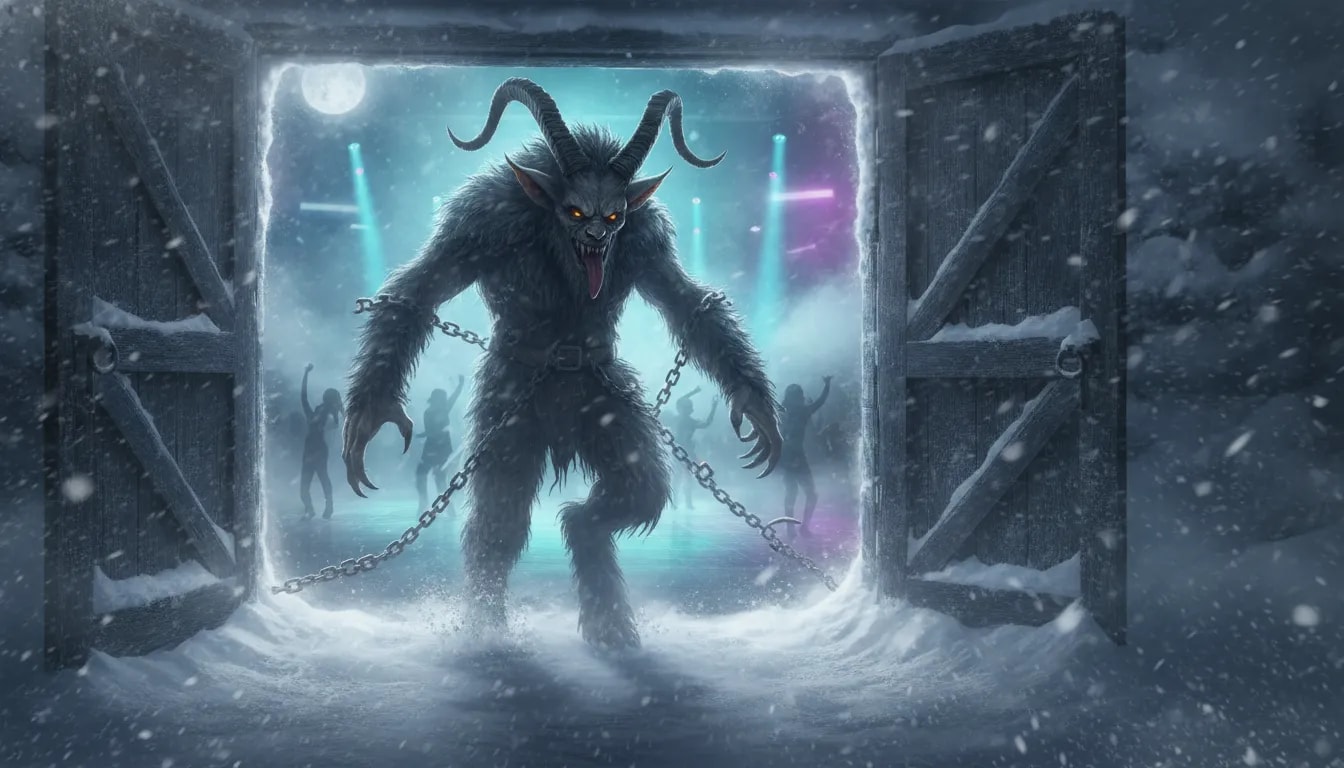

A horned figure approaches through the snow. Chains break the silence, shadows gather at the door, and the safest option seems obvious: stay inside. Then an upbeat Afro Pop-inspired groove changes the mood. Copamore’s “Krampus, Stay Outside (Afro Pop Edit)” builds its identity around that contrast, offering an unexpected discovery for anyone exploring music charts and seasonal playlists.
The concept is wonderfully direct: take a frightening character from Alpine winter folklore and place him in a dark, playful dance setting. The lyrics keep the cold and suspense intact, while the musical framing invites a much warmer response. Fear supplies the story; movement supplies the release.
Presented by Musiccharts24 as a Halloween dance anthem, the track also reaches beyond October. Its snowy setting, recurring warning, and winter imagery connect Halloween parties with Krampus season and colder nights. Here is what gives this unusual crossover its character, and how to approach it without mistaking a discovery feature for a verified chart ranking.
Table of Contents
- 👹 An Alpine Legend Meets an Afro Pop-Inspired Mood
- ❄️ The Opening Makes the Landscape Feel Alive
- 🚪 A Simple Chorus Gives the Story Its Center
- ⛓️ The Second Verse Brings the Cold Indoors
- 🔥 Why the Contrast Works as a Seasonal Dance Concept
- 🌙 The Later Passage Gives Krampus a Larger Role
- 🎨 The Visual Story Uses Warmth and Cold as Opposites
- 🎃 Where the Track Fits in a Seasonal Playlist
- 🌍 Discovering the Song Through Music Charts Without Overstating Its Success
- ✨ A Cold-Weather Story With a Playful Invitation
👹 An Alpine Legend Meets an Afro Pop-Inspired Mood
Krampus is a legendary figure associated with Alpine winter folklore. That background provides the song with a ready-made atmosphere: isolated houses, frozen landscapes, darkness, and something unsettling just beyond the doorway.
Copamore does not treat that setting as a reason to make an entirely solemn horror piece. Instead, the release pairs it with what Musiccharts24 describes as warm, upbeat Afro Pop energy. The appeal lies in the mismatch. The character belongs to an icy landscape, but the track’s dance-oriented presentation suggests a party rather than a retreat.
This is a contemporary crossover, not a lesson in traditional Alpine music. The folklore supplies the central figure and dramatic world. The Afro Pop-inspired approach supplies the contrasting musical mood. Keeping those roles distinct helps explain the idea without making unsupported claims about specific instruments or regional traditions.
For listeners browsing music charts, that clear identity offers a useful starting point. Before getting into individual lines, the premise is easy to grasp: winter horror with an invitation to move.
❄️ The Opening Makes the Landscape Feel Alive
The opening verse establishes danger through the environment before fully focusing on the creature. Snow seems to swallow the landscape, and the forest becomes unnaturally still. The effect is less about describing ordinary winter weather and more about making the whole setting appear to anticipate an arrival.
Then the details sharpen. Chains sound through the darkness. Horns cut across the wind. Red eyes give the approaching figure a distinct, threatening presence.
These images work together because each adds a different kind of information:
- Snow and silence establish isolation.
- Chains make the threat audible before it reaches the house.
- Horns and red eyes turn an indistinct shadow into a recognizable creature.
- Doors and gates create a boundary between apparent safety and danger.
The accompanying imagery makes those details concrete. A horned creature advances through moonlit snow carrying branches and a chain. It is an immediate visual expression of the song’s winter-horror premise.
For a music charts discovery, this gives the release an identifiable world. The seasonal theme is not simply attached to the title. It shapes the setting, the character, and the unfolding tension.
🚪 A Simple Chorus Gives the Story Its Center
As the first verse develops, the threat moves closer to home. Bolted doors, approaching footsteps, and sounds within the walls bring the fear into an intimate space. A racing heartbeat becomes part of the scene.
The chorus answers that rising pressure with a repeated plea for Krampus to remain outside. It is a simple idea, but simplicity is useful here. The verses can paint elaborate pictures because the refrain keeps returning to one unmistakable request.
There is also a tension inside that request. Asking the creature to stay away suggests that a boundary might still hold. The recurring sense that there is nowhere to hide undermines that hope. The chorus moves between resistance and helplessness without needing a complicated plot.
For readers who use music charts to find memorable hooks, this is the song’s most accessible feature. The repeated name identifies the character, the warning establishes the stakes, and the return of low bells signals that the danger has not passed.
Repetition also gives the track its playful potential. A frightened command becomes a phrase that can be shared, remembered, and repeated in a party setting. The menace remains part of the fiction, while the hook becomes part of the fun.
⛓️ The Second Verse Brings the Cold Indoors
The next verse does more than repeat the opening scenery. It expands the creature’s influence. Frozen ground, breath turning icy, chilled hallways, and flickering light suggest that the winter outside is beginning to invade the shelter within.
That shift matters. Early on, danger approaches across a landscape. Later, it seems capable of changing the atmosphere inside a home. The distinction makes the repeated request to stay outside feel increasingly urgent.
The writing continues to lean on sensory details rather than explanations. Footsteps, chains, cracking sounds, and a whispered name build anticipation. The listener does not need a detailed account of the creature’s powers to understand the emotional situation.
This is worth noticing when exploring narrative songs through music charts: development does not always require a new event. Sometimes it comes from bringing the same threat closer, making familiar surroundings feel less secure, or changing how a repeated chorus lands.
Here, the second return to the refrain carries the weight of that escalation. The words point toward the same boundary, but the story has made it harder to trust.
🔥 Why the Contrast Works as a Seasonal Dance Concept
The release description places the track between Afro Pop, dance music, Halloween crossover, and seasonal music. Those labels describe its intended positioning, but the central creative idea is more specific: keep the imagery cold and threatening while making the overall invitation upbeat.
That approach allows two moods to coexist. The lyrics can remain full of shadows and rattling chains without requiring the entire experience to feel grim. The playful framing gives the frightening character a second role as an unlikely party guest.
It also explains why this is more useful as a distinctive discovery than as a generic promise of a hit. Music charts can introduce a song, but its individual concept gives people a reason to remember it afterward.
The crossover is clearest when described precisely. An Afro Pop-inspired edit does not, by itself, establish a particular production method, instrumental lineup, or cultural collaboration. What the supplied release information does establish is a deliberate meeting of Alpine horror imagery and upbeat, danceable energy.
That is enough to make the idea engaging. The contrast does not need extra technical claims to stand on its own.
🌙 The Later Passage Gives Krampus a Larger Role
In its later lyrical passage, the song moves beyond the image of a creature approaching a house. Smoke, timber, fur, flame, snow-covered fields, and a threatening moon give the setting a broader, more mythic scale.
Krampus becomes something closer to a ruler of the winter darkness. The writing also connects him with hidden shadows, suggesting that the fear is not only about what stands outdoors. It can be read as touching on the unease people carry within themselves.
That remains an interpretation of the song, not a claim about the full meaning of Alpine folklore. Within this particular piece, however, it deepens the character. He is no longer just a noisy visitor at the gate; he appears to belong to the entire landscape.
For music charts readers interested in more than a catchy title, this passage provides a useful point of focus. It broadens the emotional scope before the chorus returns, giving the repeated warning a larger presence.
The final lyrical returns do not neatly resolve the danger. Requests for distance and departure continue, and the closing images revisit frozen ground and icy breath. The song ends by reinforcing its world rather than explaining it away.
🎨 The Visual Story Uses Warmth and Cold as Opposites
The illustrated scenes develop a strong contrast between sheltered interiors and exposed winter landscapes. Inside, amber light, small fires, wooden walls, and domestic activities suggest comfort. Outside, blue snow, moonlight, bare branches, and looming creatures suggest vulnerability.
One particularly clear composition places a large horned figure beside a warmly lit shelter occupied by two children. The contrast makes the song’s central boundary visible: a small pocket of warmth surrounded by an enormous, threatening winter.
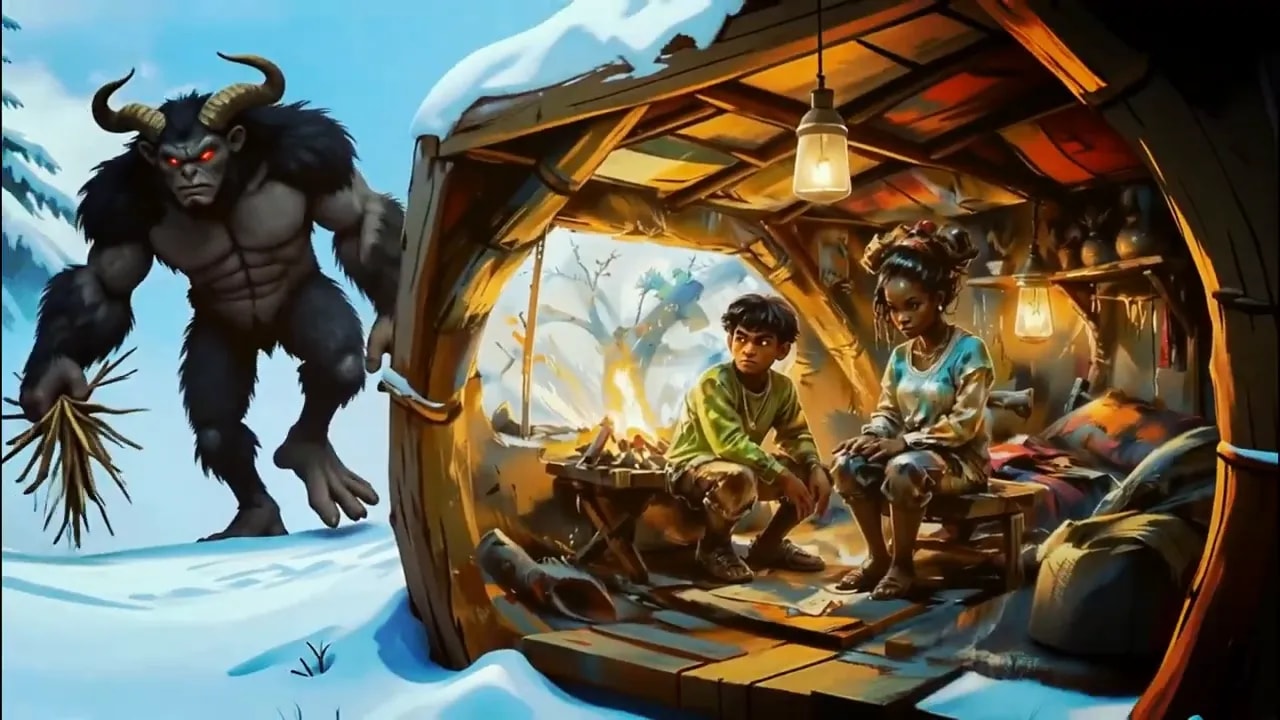
The creature’s appearance also varies across the imagery. Some versions emphasize dark fur and red eyes; others exaggerate horns, a long tongue, or animal-like features. These changes support a fantastical presentation rather than a single documentary depiction.
Later scenes push the threat across the threshold, with a large creature intruding into an interior. Near the end, a charging horned animal adds another burst of exaggerated motion. The visual story therefore keeps testing the very instruction at the heart of the refrain.
When a release appears alongside music charts coverage, artwork like this offers another way to understand its identity. Here, the visual value is not simply decoration. It clarifies the opposition between refuge and intrusion that runs through the lyrics.
🎃 Where the Track Fits in a Seasonal Playlist
The Halloween positioning makes sense because the song offers a recognizable monster, suspenseful imagery, and a repeated warning. Its winter setting gives it another use, too. Nothing about the snow, moonlight, or frozen forest confines the concept to October.
Rather than treating music charts as a playlist formula, consider what role the song could play in a particular sequence:
- A Halloween dance playlist: Use it when the goal is spooky character and movement rather than uninterrupted darkness.
- A Krampus-themed gathering: Its central figure makes the connection direct.
- A winter party: The snowy imagery offers a seasonal alternative to a purely cozy mood.
- A crossover discovery selection: Its unusual premise can add contrast to more familiar material.
These are suggested contexts, not evidence of existing playlist placements or audience results. The practical question is whether the combination suits the mood you want.
The release’s playful challenge captures that choice neatly: secure the door, or welcome the party? It turns the song’s central fear into an easy conversation starter without requiring anyone to know the folklore beforehand.
🌍 Discovering the Song Through Music Charts Without Overstating Its Success
Musiccharts24 presents itself as a destination for weekly Top 10 selections, new discoveries, and genre-crossing music. That makes its music charts website a relevant place to explore the wider discovery context around this release.
It is important, though, to separate editorial presentation from measured performance. The available release information does not establish a chart position, streaming total, sales figure, or viral milestone for “Krampus, Stay Outside.” Calling it a chart-topping hit would go beyond that information.
Music charts discovery and verified chart success are not the same thing. A song can be interesting, distinctive, and worth exploring without a documented ranking. In this case, the strongest case rests on the work itself: a clear seasonal character, vivid imagery, a repeated central hook, and an unexpected stylistic pairing.
For more about the project behind the release, the Copamore page provides the relevant destination. Approaching music charts with that combination of curiosity and precision leaves room for discovery without turning promotional language into fact.
✨ A Cold-Weather Story With a Playful Invitation
“Krampus, Stay Outside (Afro Pop Edit)” finds its appeal in a contradiction it never needs to solve. The words ask the monster to leave. The dance-oriented concept makes his arrival part of the entertainment.
Across its verses, the danger grows from a distant presence into something that seems to command the winter landscape. The chorus keeps that larger story grounded in one simple wish: preserve the boundary between the warmth inside and the darkness beyond it.
For anyone exploring music charts for something a little different, that combination offers a clear reason to be curious. The song brings folklore into a fresh seasonal setting while keeping its premise easy to enjoy: the creature can stay outside, but the music is welcome in.
Free Music Production Class!
Check out this really cool thing
