
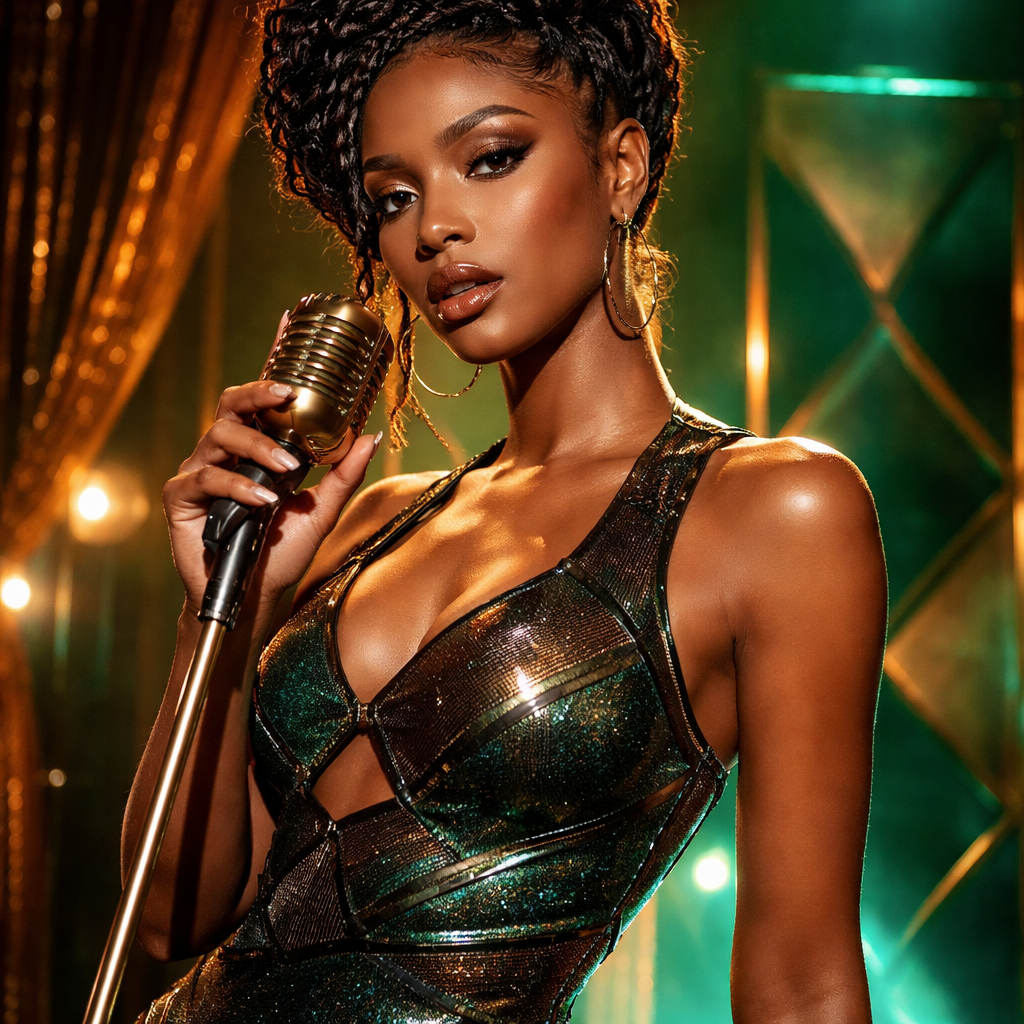

The hum of my monitor is less a background noise and more a constant companion. It’s the soft lullaby of ambition, punctuated by the occasional clatter of a dropped USB stick or the frustrated sigh that escapes me when a particular synth line refuses to behave. I’m Nick, and I spend my days, and often nights, wrestling with audio waveforms in the humble confines of my home studio. It’s a kingdom of cables and blinking lights, where I strive to forge sonic adventures. Recently, the very landscape of my sonic explorations has begun to shift, blurring what used to feel like distinct territories. Everyone’s talking about it, this dissolving of genre borders. And frankly, it’s about time.
I remember when I first dipped my toes into the murky waters of music production. It felt like navigating a meticulously organized library. You had your classical section, your rock aisle, your jazz corner. If you were making a punk song, you knew the rules: three chords, a snarling vocalist, and a healthy dose of rebellion. If you fancied yourself a hip-hop producer, you were digging for breakbeats, chopping samples, and crafting infectious loops. There was a certain comfort in that structure, a predictable path to follow. It was like being handed a recipe card; follow the instructions, and you’d churn out something recognizable.
The Archetypal Sounds: Building Blocks of Identity
Think about the defining sounds of eras. The wailing guitar solos of 70s rock. The vocoders and synthesizers of early 80s electro-funk. The booming 808s and turntable scratches of golden age hip-hop. These were the sonic markers, the recognizable signatures that immediately told you where you were. My early attempts at production were very much in this vein. I’d meticulously try to recreate the crunchy drums of a hip-hop track, or the soaring synth leads of a eurodance anthem. It was a form of homage, a way of understanding the craft by deconstruction.
The Gatekeepers and the Uninitiated: Navigating the Established Order
Back then, there were also these perceived gatekeepers. Music journalists, radio DJs, record label scouts – they seemed to have a firm grip on what was what. If your music didn’t neatly fit into their predefined boxes, it was harder to get noticed. I’d occasionally chat with Mark, a chap who ran a small independent record store that somehow defied the digital tide. He’d talk about the days when a new release was categorized, filed away, and then marketed accordingly. “It was simpler, Nick,” he’d say, polishing a vintage vinyl with a cloth that had seen better days. “You knew what you were buying. Now? It’s like trying to herd cats.” He’d always offer this with a wry smile, a hint of nostalgia for a time that was perhaps more straightforward, if less adventurous.
In exploring the evolution of music genres and the blurring of their boundaries, it’s interesting to consider the journey of individual artists who embody this trend. A compelling example is the talented Baden musician Southdogrock, whose heartfelt rock anthem “Vollgasliebe” showcases a fusion of styles that reflects the changing landscape of music. For more insights into how artists are redefining genre norms, you can read the article here: Southdogrock: The Talented Baden Musician Crafting Heartfelt Rock Anthem “Vollgasliebe”.
The Digital Deluge: A Flood of Influences
Then, the internet happened. And the dam broke. Suddenly, the entire world’s musical output was at my fingertips. Forget the local record store; I had access to an infinite library. This democratized access to music and, perhaps more importantly, to the creation of music. My production setup used to cost a small fortune. Now, a capable laptop and a few well-chosen software plugins can rival the sonic capabilities of studios that once cost hundreds of thousands. This accessibility is fundamental to the genre’s erosion.
The Sample Culture Revolution: Forging New Narratives
Sampling has always been a cornerstone of so much music, but the ease with which we can now access and manipulate audio has turbo-charged this. I remember a particularly exhilarating session where I was trying to craft a downtempo electronic track with a slightly melancholic feel. I’d been listening to a lot of old jazz records, the kind with crackling vinyl and smoky saxophone solos. I stumbled upon a snippet of a forgotten blues singer’s lament. The sheer raw emotion in her voice, coupled with the melancholic chord progression underneath, was perfect. I sampled a small fragment, pitched it down, and ran it through a reverb that gave it an ethereal, almost ghostly quality. It wasn’t intended to be a blues track, or even a jazz track. It was simply a texture, an emotional brushstroke. This ability to pluck sounds from disparate corners of musical history and weave them into something entirely new is a powerful force.
The Algorithmic Architects: Curated Discoveries and Serendipitous Encounters
Streaming platforms, with their intricate algorithms, have also played a surprising role. While they can sometimes create echo chambers, they also expose us to artists and sounds we might never have encountered otherwise. I’ve had conversations with people whose entire musical tastes have been shaped by these recommendation engines. Sarah, a graphic designer who also dabbles in electronic music, told me about how Spotify suggested a deep house track that sampled a traditional Mongolian throat singer. “It was bizarre, Nick,” she laughed. “Completely unexpected. But it worked. The drones of the throat singing, under that pulsating bassline… it opened up a new sonic palette for me.” These accidental discoveries are like finding hidden pathways in the musical landscape, leading us to unexpected junctions.
The Producer’s Playground: When Tools Become Instruments
The tools themselves have become infinitely more flexible, blurring the lines between what was once the domain of one genre and another. The once-rigid distinctions between acoustic and electronic instruments are virtually non-existent now. I can take a perfectly good acoustic guitar performance, mangle it with distortion and delay, and it can sound more like a synth than a traditional guitar. The software I use – my digital audio workstation, or DAW – is less of a tool for recording and more of a colossal sonic laboratory.
The Soft Synth Symphony: Infinite Sonic Sculptures
I used to covledge the idea of owning vintage synthesizers. The Minimoog, the Juno-106. Beautiful pieces of hardware, yes, but also incredibly expensive and often limited in their sonic scope. Now, I have software synths that can emulate those legends, and then some. I can sculpt sounds that have never existed before, creating textures that are both familiar and utterly alien. I spent an entire week recently just trying to create the perfect “rainy day synth pad.” It started as a plucked string sound, then morphed through a granular synthesizer, adding subtle detuning and a touch of bitcrushing. By the end, it sounded like… well, like nothing I’d ever heard before. And it wasn’t trying to be a specific genre; it was just _a sound_.
The Hybridization of Instrumentation: Breaking Down Walls
This blurring isn’t just limited to synths. I’ve got plugins that can make a drum machine sound like it was recorded in a cathedral, or a string quartet sound like it was generated by a glitchy computer algorithm. I was talking to Liam, a guitarist who’s started getting into production. He was complaining about how his traditional guitar rig felt constricting. “I spend weeks practicing scales, trying to get that perfect bluesy feel,” he said, frustration lacing his voice. “But then I hear electronic music, and it feels so… raw, so immediate, even without all the technical virtuosity. I’m starting to record my guitar, then process it heavily, making it sound like a synth lead. It’s liberating. I’m not just a guitarist anymore; I’m a sound designer.”
Sure, here is the sentence with the clickable link:
I am interested in learning more about music production techniques.
The Shifting Listener Landscape: The Rise of the Eclectic Ear
And it’s not just us producers. The audience has changed too. We’re all exposed to such a vast array of music that our palates have become more adventurous. The days of someone exclusively listening to one narrow genre are becoming increasingly rare, especially among younger generations who have grown up with this constant sonic overflow.
The Playlist Generation: Curated Journeys, Not Destinations
My niece, Chloe, is a prime example. She’s 17, and her music taste is a dizzying, exhilarating kaleidoscope. One minute she’ll be blasting some hyperpop, the next she’s digging into 70s funk, and then she’ll be sharing me some obscure lo-fi hip-hop beats. “It’s all about the vibe, Uncle Nick,” she told me, her eyes bright with enthusiasm. “If a song makes me feel something, if it’s got a good beat or an interesting melody, I don’t really care if it’s supposed to be ‘rock’ or ‘electronic’ or whatever. It’s just good music.” Her curated playlists on Spotify are less about genre and more about emotional journeys. They’re fluid, always evolving, reflecting her current mood and discoveries.
The Algorithmic Echo Chamber’s Counter-Response: The Deeper Dive
While algorithms can sometimes spoon-feed us, they also, paradoxically, encourage deeper dives. If a listener enjoys a particular track, the algorithm will offer similar ones, which might not be strictly within the same genre but share certain sonic or emotional characteristics. This leads to a kind of sonic archaeology, where listeners excavate the interconnectedness of different musical styles. I’ve had listeners tell me they discovered my music because it was recommended alongside artists they liked from completely different genres, simply because of a shared tempo or a certain atmospheric quality.
The evolution of music has led to a fascinating phenomenon where genre borders are disappearing, allowing for a more fluid and diverse listening experience. This shift is evident in the way artists are blending styles and influences, creating unique sounds that defy traditional categorization. For those interested in exploring this trend further, a related article discusses the top hits of today that embody this genre-blending spirit, showcasing how contemporary music captures the essence of summer vibes. You can read more about it in this insightful piece on summer hits.
The Artist’s Liberation: Beyond the Lyrical Box
| Reasons | Explanation |
|---|---|
| Streaming Platforms | Streaming services offer a wide range of genres, allowing users to explore different types of music, movies, and TV shows. |
| Collaborations | Artists from different genres are collaborating more frequently, blurring the lines between musical styles. |
| Diverse Audience | With globalization, audiences have become more diverse, leading to a demand for a variety of entertainment options. |
| Artistic Freedom | Artists are increasingly embracing creative freedom, incorporating elements from multiple genres into their work. |
For me, this dissolution of genre borders is profoundly liberating. It means I’m not beholden to a set of established conventions. I can experiment, I can combine, I can create something that simply _is_, without needing to label it or fit it into a pre-existing box. It’s about expressing a feeling, an idea, through sound, regardless of its sonic lineage.
The Freedom to Experiment: Forging Uncharted Territories
This freedom allows for incredible creative leaps. I can take a somber classical piano melody and layer it with 80s synth arpeggios and a booming trap beat, and it doesn’t feel like a chaotic mess; it feels like a deliberate artistic statement. I’m not trying to make a “classical-trap-synth-pop” song. I’m just trying to craft a particular sonic atmosphere that conveys a specific emotion or narrative. My goal is to create something that resonates, that tells a story, that evokes a feeling, irrespective of its genre-bending DNA.
The Authenticity Imperative: The Sound of Now
Ultimately, I think this is about authenticity. The music we hear today is a reflection of our interconnected, hyper-stimulated world. It’s natural that our music would become as fluid and hybridized as our lives. Trying to force music into rigid genre boxes in this day and age feels almost anachronistic. It’s like trying to fit a modern smartphone into a cassette tape player. The tools have evolved, the influences have merged, and the listeners are more open than ever. This is the sound of now, and it’s a beautiful, boundless symphony. The hum of my monitor continues, a gentle reminder that the sonic frontiers are constantly expanding, and I, for one, am eager to explore them.
Check Out Our Music Producer Class!
FAQs
1. What are genre borders in the context of music, literature, and film?
Genre borders refer to the traditional categorization of artistic works into specific genres such as rock, pop, science fiction, romance, and so on. These categories have historically been used to classify and market creative works based on their stylistic and thematic elements.
2. Why are genre borders disappearing in the creative industries?
Advancements in technology, globalization, and changing consumer preferences have contributed to the blurring of genre borders. Artists and creators are increasingly blending elements from different genres to create innovative and unique works that defy traditional categorization.
3. How is the disappearance of genre borders impacting the creative industries?
The disappearance of genre borders has led to greater diversity and experimentation in music, literature, and film. It has also expanded the audience’s exposure to a wider range of artistic expressions and has challenged the traditional ways of marketing and consuming creative works.
4. What are some examples of artists or works that are breaking genre boundaries?
Artists like Beyoncé, Kendrick Lamar, and Taylor Swift have incorporated elements from multiple genres in their music, while authors like Haruki Murakami and Margaret Atwood have blended literary genres in their novels. Films like “Get Out” and “The Shape of Water” have defied traditional genre conventions, garnering critical acclaim and commercial success.
5. What are the potential implications of the disappearing genre borders for the future of the creative industries?
The blurring of genre borders may lead to a more inclusive and dynamic creative landscape, allowing for greater artistic freedom and innovation. It may also present challenges in terms of marketing and categorizing works, as well as redefining the way audiences engage with and interpret creative content.
