
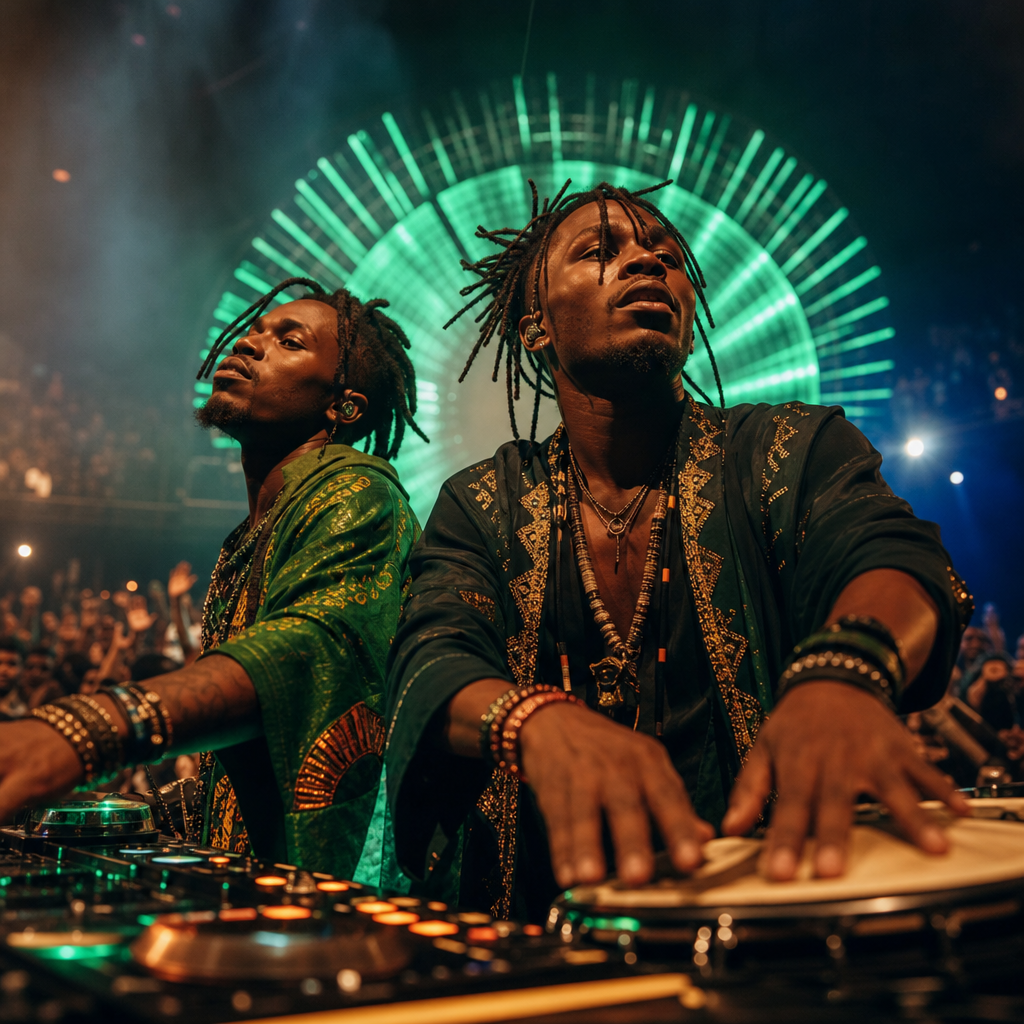

Meta Description: Explore whether AI can craft the next global superstar. Delve into AI’s role in music creation, performance, and audience engagement, weighing its potential against the irreplaceable human element.
URL Slug: ai-global-superstar-music
Tags: AI in music, artificial intelligence, music industry, global superstar, virtual artists, AI creativity, music production, audience engagement, human artistry, technology in entertainment
The Dawn of Algorithmic Fame: Can AI Forge a Global Superstar?
The concept of a global superstar has long been intertwined with raw talent, charisma, tireless dedication, and often, a serendipitous confluence of circumstances. From Elvis Presley’s swivel to Beyoncé’s unparalleled stage presence, human connection has been the bedrock of enduring fame. Yet, as artificial intelligence continues its relentless march into every facet of our lives, a provocative question arises: could an algorithm, rather than a person, create the next global musical sensation? This isn’t merely about AI assisting artists; it’s about AI becoming the artist, the persona, the entire package. The music industry, always quick to embrace innovation, now finds itself at a fascinating crossroads, where the lines between creator, performer, and product are blurring at an unprecedented pace. The answer is complex, touching upon the very essence of creativity, authenticity, and the unique human need for emotional resonance.
In exploring the potential of AI to create the next global superstar, it’s interesting to consider the evolution of music genres and their cultural impact. A related article that delves into the origins and rise of a contemporary genre is “The Roots of Reggaeton,” which highlights how this vibrant style has shaped the music landscape. You can read more about it here: The Roots of Reggaeton. This context can provide valuable insights into how AI might influence the creation and popularity of future music stars.
AI’s Growing Footprint in Music Creation
The idea of AI-generated music is no longer confined to science fiction. Advanced algorithms are already demonstrating remarkable capabilities in composing, arranging, and even mastering tracks, often indistinguishable from human-made music to the untrained ear. These tools are becoming increasingly sophisticated, moving beyond mere mimicry to genuinely innovative creation.
Algorithmic Composition and Production
AI models, trained on vast datasets of existing music, can learn intricate patterns, harmonic progressions, melodic structures, and rhythmic variations across various genres. Companies like AIVA (Artificial Intelligence Virtual Artist) and Amper Music have been at the forefront, generating original soundtracks for films, video games, and commercials. These platforms can produce entire compositions based on user-defined parameters such as mood, tempo, and instrumentation. For instance, a filmmaker might request a “somber, string-heavy piece with a slow tempo,” and the AI would generate a bespoke composition in moments. This efficiency drastically reduces the time and cost associated with traditional music production, opening doors for content creators who might not have the budget for human composers.
Furthermore, AI is excelling in production aspects. Tools like LANDR use machine learning to master tracks, analyzing the sonic characteristics of professional recordings and applying similar processing to achieve a polished, broadcast-ready sound. Other AI systems can generate entire drum tracks, basslines, or even vocal harmonies, allowing human producers to focus on the overarching artistic vision rather than getting bogged down in granular tasks. This collaboration between human and machine is already producing chart-worthy results, with AI acting as an unparalleled assistant, an inexhaustible source of ideas, and an incredibly efficient technician.
The Rise of AI-Generated Voices and Lyrics
Beyond instrumental composition, AI is also making significant strides in vocal synthesis and lyrical generation. Text-to-speech technology has evolved to a point where AI voices can replicate human inflections, emotions, and even specific vocal styles. DeepMind’s WaveNet, for example, can generate remarkably natural-sounding speech. When applied to singing, AI models can produce entire vocal performances, sometimes even mimicking the timbre and style of famous human singers, albeit often with ethical implications. Virtual artists like Hatsune Miku, while not purely AI-generated in their initial conception, demonstrate the audience’s willingness to embrace non-human performers whose voices are synthesized.
Lyric generation, too, is a rapidly advancing field. AI models, fed with colossal libraries of song lyrics, poetry, and prose, can learn to construct coherent, emotionally resonant, and stylistically appropriate lyrics. OpenAI’s GPT-3, for instance, can generate surprisingly creative and contextually relevant text, including song lyrics in various genres. While the emotional depth and lived experience often found in human-penned lyrics might still be a challenge for AI, its ability to craft catchy phrases, rhyming schemes, and thematic narratives is undeniably impressive. Combining these vocal and lyrical capabilities, it’s theoretically possible for AI to construct an entire song from scratch, complete with vocals and instrumentation, without direct human intervention after the initial prompt.
Crafting the AI Persona: Performance and Visuals
A global superstar isn’t just about the music; it’s about the complete package – the persona, the visual identity, the live performance, and the interaction with fans. AI is now capable of contributing significantly to these elements, constructing virtual entities that are designed for mass appeal.
Virtual Avatars and Digital Performances
The visual aspect of an AI superstar is crucial. Advances in computer graphics and animation allow for the creation of incredibly realistic or stylized virtual avatars. These avatars can be designed to embody specific aesthetics, personality traits, and demographics, meticulously crafted to resonate with target audiences. Imagine an AI designed to appeal to Gen Z, featuring holographic performances that adapt in real-time to audience engagement metrics. Virtual idols like K/DA, a virtual K-pop girl group created by Riot Games, have already garnered billions of views and have performed on global stages alongside human artists, demonstrating the immense appeal of digitally rendered performers.
These virtual avatars can “perform” in various ways: through sophisticated motion capture of human dancers translated onto the avatar, entirely AI-generated movements that are optimized for visual appeal, or even as holographic projections in real-world venues. The benefit is immense flexibility – an AI superstar would never tire, never age, never have scheduling conflicts, and could theoretically perform in multiple locations simultaneously. Their appearance could be infinitely customizable, adapting to trends or even individual fan preferences. This level of control over image and performance is something no human artist can achieve, offering an unprecedented opportunity for market tailoring.
AI in Storytelling and Brand Building
Beyond the music and visuals, a superstar needs a compelling narrative, a backstory that fans can connect with. AI could play a pivotal role in crafting this narrative. Trained on celebrity biographies, marketing campaigns, and fan engagement data, an AI could generate a cohesive and emotionally resonant “life story” for its virtual artist. This narrative could evolve in real-time, responding to audience feedback or current cultural events, ensuring maximum relevance and engagement.
Furthermore, AI could manage the entire brand ecosystem. This includes designing merchandise, creating promotional content for social media, and even generating personalized fan interactions. An AI could analyze fan comments, identify sentiment, and generate bespoke replies or even personalized song snippets for dedicated followers. This constant, tailored engagement, coupled with an immaculately crafted persona and an endless supply of market-optimized music, could forge a bond with audiences that is deeply personal and seemingly authentic, even if the “artist” itself is artificial. This is where the line between genuine connection and sophisticated manipulation becomes incredibly thin, raising ethical considerations about parasocial relationships with non-existent entities.
The Human Element: Irreplaceable or Reducible?
Despite AI’s impressive capabilities, the question of whether it can truly create a global superstar hinges on a fundamental aspect of human psychology: our need for genuine connection, vulnerability, and the shared experience of authentic emotion.
The Role of Authenticity and Vulnerability
Human artists, by their very nature, bring their lived experiences, their struggles, triumphs, and unique perspectives to their art. This authenticity and vulnerability are what often forge the deepest connections with audiences. When an artist sings about heartbreak, fans resonate because they understand that emotion comes from a real place. Can an AI truly “feel” heartbreak or joy? While it can simulate these emotions convincingly through its output, the underlying source is a complex algorithm, not a sentient being. As Dr. Emily Cross, a professor of social neuroscience at the University of Glasgow, notes, “Our brains are wired to connect with other humans. We seek out authentic expression, and that’s hard to replicate purely computationally.”
The imperfections, the spontaneous moments, the unexpected rawness in a live performance – these are often the moments that define a superstar and create legendary status. An AI, by design, would strive for perfection and optimization. While this might appeal to some, others might find it sterile or lacking the very human “spark” that makes an artist compelling. Think of the raw emotion of Adele’s vocals or the unpredictable energy of a Beyoncé concert. These moments are born from human experience, not algorithms.
The Nuance of Human Creativity and Innovation
True artistic innovation often springs from intuition, serendipity, and a willingness to break rules. Human artists challenge conventions, invent new genres, and push boundaries in ways that AI, which is fundamentally based on learning from existing data, struggles to replicate. While AI can create novel combinations of existing elements, its capacity for truly paradigm-shifting creativity – the kind that defines artistic movements – is still limited. As Brian Eno, a pioneer in ambient music, once stated, “The first thing that good art does is make you aware of its own presence as art. The second thing is it makes you aware of yourself.” This self-awareness and the capacity to reflect the human condition in deeply profound ways are currently beyond AI’s grasp.
Furthermore, the narrative of struggle, breakthrough, and artistic evolution is a powerful one for human artists. Fans often connect with an artist’s journey, witnessing their growth and resilience. An AI, without a personal history of struggle or growth, cannot offer this compelling narrative. Its “evolution” would be a matter of software updates, not personal transformation. The stories behind the songs, the reasons an artist wrote a particular lyric – these are often as important as the music itself for building a lasting connection.
In exploring the impact of artificial intelligence on the music industry, one intriguing aspect is how AI-generated content could lead to the emergence of new talents. A related article discusses the creative fusion of classic literature and modern music in “Alex Genadinik’s Shakespearean Rhapsody,” which weaves Shakespearean quotes into a romantic ode. This innovative approach highlights the potential for AI to not only create but also enhance artistic expression, raising questions about the future of global superstars in the age of technology. For more insights, you can read the article here.
AI as a Catalyst, Not a Replacement
While the idea of a purely AI-generated global superstar has a certain futuristic appeal, a more realistic and perhaps more impactful future lies in AI serving as a powerful catalyst for human creativity, rather than a wholesale replacement.
Empowering Human Artists
AI tools are already democratizing music creation. Aspiring musicians, who might lack the budget for professional studio time or session musicians, can now use AI to generate backing tracks, mix and master their songs, and even refine their vocal performances. This lowers the barrier to entry, allowing more diverse voices to be heard. AI can act as a tireless collaborator, offering endless variations of melodies, harmonies, and rhythms for human artists to adapt and integrate into their work. Imagine a songwriter experiencing writer’s block; an AI could generate hundreds of lyrical prompts or melodic fragments to inspire new ideas.
Moreover, AI can help artists analyze fan engagement, identify emerging trends, and optimize their release strategies. By understanding what resonates with their audience, artists can tailor their output while retaining their artistic integrity. This data-driven approach, powered by AI, allows human artists to make more informed decisions about their careers, reaching wider audiences more effectively without compromising their unique vision. The global superstar of tomorrow might be a human artist who leverages AI in incredibly sophisticated ways, rather than being an AI itself.
Enhancing Live Experiences and Fan Engagement
AI can significantly enhance the live performance experience. Real-time visual projections that react to the music and audience energy, personalized sound mixes for individual attendees, and even interactive elements that allow fans to influence aspects of the show are all within AI’s capabilities. Imagine an arena concert where the stage design and lighting evolve based on the collective mood of the audience, analyzed in real-time by AI. This creates a deeply immersive and personalized experience that amplifies the human performance.
For fan engagement, AI chatbots can manage community forums, answer common questions, and even generate personalized messages from the “artist,” maintaining a constant connection with the fanbase. AI could also curate personalized playlists for fans based on their listening habits and preferences, integrating the artist’s new releases seamlessly into their daily lives. This level of personalized interaction, while potentially blurring the lines of authenticity, undoubtedly strengthens the parasocial bonds that are crucial for a superstar’s longevity. AI isn’t just about creating music; it’s about optimizing the entire ecosystem around a human artist to maximize their reach and impact.
As the conversation around artificial intelligence in the music industry continues to grow, many are curious about the potential for AI to create the next global superstar. This topic is not only fascinating but also timely, especially with the upcoming releases that could shape the future of music. For instance, you might find it interesting to explore the top albums set to debut in the coming months, which may feature innovative collaborations between human artists and AI technology.
The Future of Fame: A Hybrid Landscape
The trajectory of AI in the entertainment industry suggests not a complete takeover, but a symbiotic relationship where technology amplifies human potential. The idea of a purely AI-generated global superstar, devoid of any human touch, faces significant hurdles, primarily concerning authenticity, emotional connection, and the inherent human need for shared experience.
While AI can certainly produce music that is technically perfect and aesthetically pleasing, and create virtual personas that are visually captivating, the deep-seated human desire for relatable narratives, vulnerability, and the unpredictable spark of genuine creativity remains a powerful force. A global superstar often transcends mere talent; they embody a cultural moment, reflect societal shifts, and offer a unique lens through which we interpret the world. These are complex human phenomena that current AI, despite its advancements, is not equipped to fully replicate.
Instead, the most likely future sees a hybrid landscape. Human artists will increasingly leverage AI as an indispensable tool for composition, production, marketing, and fan engagement. AI will empower them to create more efficiently, reach wider audiences more effectively, and craft more immersive experiences. We may see AI-generated vocalists or instrumentalists collaborating with human songwriters and performers, creating new sonic textures and creative synergies. Virtual idols may continue to thrive, particularly within niche markets or as experimental artistic ventures, but they will likely coexist with, rather than replace, human superstars. The next global superstar will probably be human, but their journey to the top, and their ability to sustain that fame, will be inextricably linked to the intelligent application of AI. The ultimate power of a superstar lies in their ability to make us feel, and for now, that profound emotional resonance remains the unique domain of human artistry.
FAQs
1. Can AI create music that rivals human musicians?
Yes, AI technology has advanced to the point where it can compose music that is indistinguishable from that created by human musicians. AI algorithms can analyze existing music, learn patterns, and generate new compositions in various styles.
2. How is AI being used in the entertainment industry?
AI is being used in the entertainment industry in various ways, such as creating personalized recommendations for movies and music, generating scripts for films and TV shows, enhancing special effects, and even developing virtual influencers and celebrities.
3. Will AI-generated content replace human creativity in the entertainment industry?
While AI can produce content efficiently and at a large scale, many believe that human creativity and emotional depth are irreplaceable. AI-generated content may complement human creativity, but it is unlikely to completely replace it in the entertainment industry.
4. Can AI help discover and promote new talent in the entertainment industry?
Yes, AI can analyze vast amounts of data to identify emerging trends, predict audience preferences, and discover new talent. AI algorithms can help talent scouts and producers find promising artists, actors, and creators who may have gone unnoticed otherwise.
5. What are the potential ethical implications of using AI to create global superstars?
Using AI to create global superstars raises concerns about authenticity, privacy, and the impact on traditional entertainment industries. There are also questions about who owns the rights to AI-generated content and the potential for bias in AI algorithms when selecting and promoting talent.
